
Each May, the Stroke Association marks ‘Action on Stroke Month’, the UK’s largest annual campaign dedicated to stroke awareness. Throughout the month, the charity brings together stroke survivors, healthcare professionals, and members of the public to raise money for research, support the UK’s 1.4 million stroke survivors, and educate people on the warning signs of stroke.
The campaign exists primarily because stroke remains one of the leading causes of death and disability in the UK, and prompt, effective diagnosis and treatment can be the difference between a full recovery and permanent disability.
With that in mind, the specialist medical negligence solicitors at Mooneerams have put together this blog to discuss what happens when the warning signs of a stroke aren’t picked up in time, when that failure might amount to medical negligence, and when a stroke misdiagnosis claim can be brought.
What happens when someone has a stroke?
While the majority of people understand that a stroke is a medical emergency, fewer understand what actually happens when somebody experiences one.
When you have a stroke, the blood supply to part of your brain is interrupted, starving brain cells of oxygen and causing them to die.
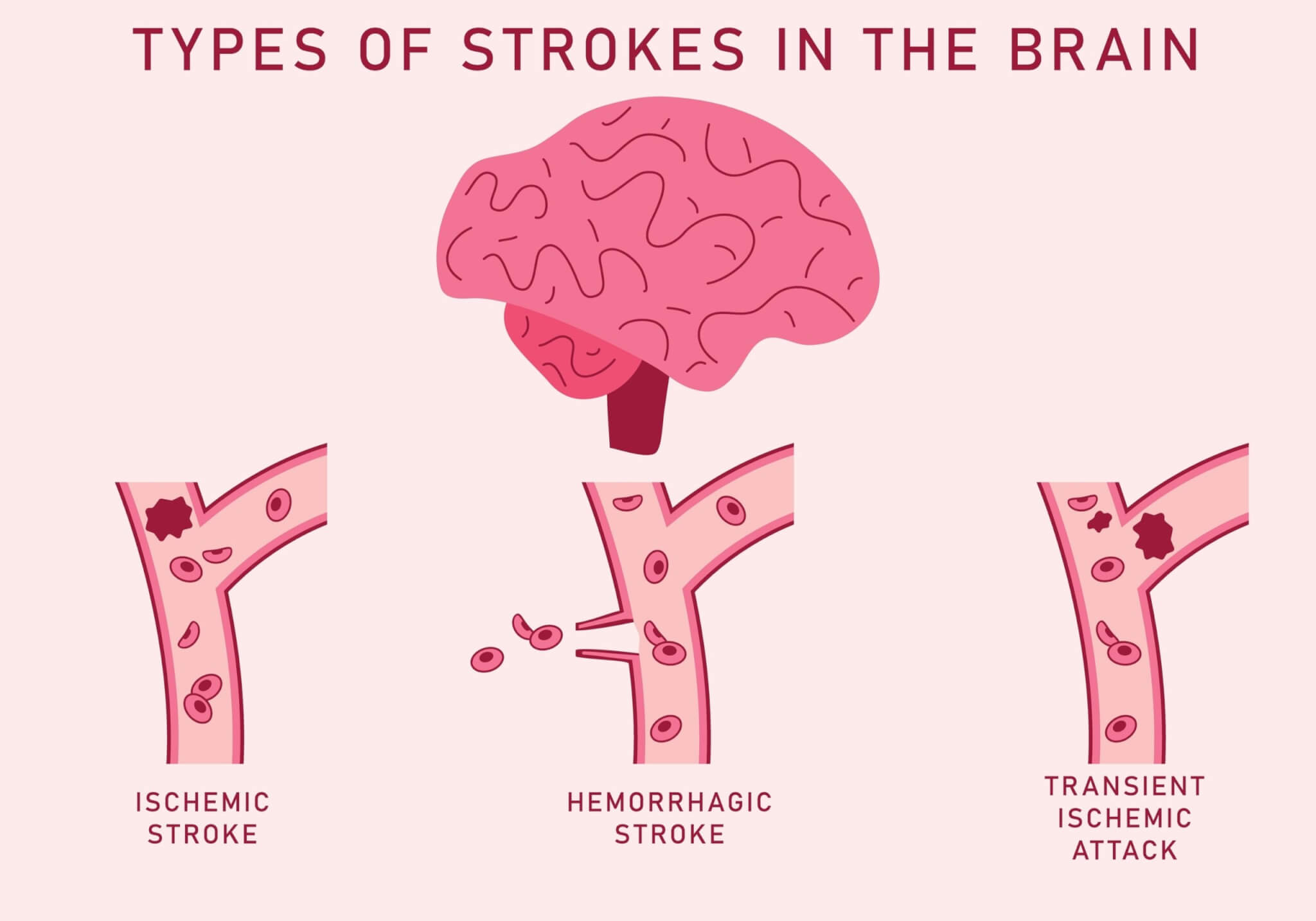
There are two main types of strokes.
The most common type, an ‘ischaemic stroke’, is caused by a clot blocking a blood vessel in the brain. Ischaemic strokes account for around 85% of stroke cases.
A haemorrhagic stroke is caused by a blood vessel bursting and leaking blood into the surrounding tissue. Haemorrhagic strokes account for the remaining 15% of stroke cases. Although haemorrhagic strokes are less common, they’re more dangerous, carrying the highest mortality risk of the stroke types.
Not every stroke causes lasting symptoms right away. A transient ischaemic attack (TIA), often called a mini stroke, can cause the same symptoms as a stroke, but the symptoms usually pass within a short time.
That said, you should always seek medical attention if you suspect you’ve experienced a TIA. They act as a warning that you’re at risk of having a full stroke in the near future; nearly 1 in 5 people who have a suspected TIA go on to have a stroke within 90 days. A medical professional can put measures in place to reduce the likelihood of that happening.
What are the warning signs of a stroke?
Most of us have heard the phrase ‘F.A.S.T’ in the context of strokes. Standing for ‘Face, Arms, Speech, Time’, it’s the phrase the NHS uses to remind people what the symptoms of a stroke look like, so that they know when to seek medical advice.
In a nutshell, ‘F.A.S.T’ means that if you experience any of the most common symptoms of a stroke – a drooping Face, Arm weakness, or Slurred speech – it’s Time to call 999.
When someone is suffering a stroke, speed of response is crucial. Unlike skin or bone, brain tissue doesn’t regenerate – once your brain cells are destroyed, they’re gone for good. Acting quickly gives you the best chance of survival and recovery.
The problem is that not every stroke presents with these textbook symptoms. Sufferers can also experience sudden blurred or double vision, sensory disturbance, a severe and unexplained headache, numbness or weakness down one side of the body, confusion, difficulty swallowing, or intense dizziness that doesn’t go away.
Given the severity of a stroke, it’s always better to be safe than sorry. If you experience any symptom that could indicate a stroke, you should seek medical help immediately.
How should suspected strokes be treated?
Getting appropriate medical treatment for a stroke can be fundamental to the outcome.
You will likely be sent to hospital with a hyperacute stroke unit, where you should be assessed quickly and given a CT scan. The scan establishes which type of stroke you have experienced.
If the scan shows an ischaemic stroke, which is where a blood clot blocks a vessel, you may be given thrombolysis to dissolve the blockage and restore blood flow to the brain.
Where a larger vessel is blocked, a thrombectomy may also be offered, in which a specialist threads a tiny device through the arteries to physically remove the clot.
If the scan shows a haemorrhagic stroke, which involves bleeding in or around the brain, the aim of treatment is to stop the bleeding rather than dissolve clots. Treatment typically involves urgent control of your blood pressure and, in some cases, surgery to relieve pressure on the brain or repair a damaged blood vessel.
After the acute phase, regardless of the type of stroke, you should be cared for by a specialist stroke unit and supported through rehabilitation, including physiotherapy, occupational therapy, and speech and language therapy, to help you regain any function affected by the stroke.
When strokes are recognised and treated quickly, the outcome can be much better than it would otherwise have been. Patients who might otherwise have been left with severe, lifelong disability can walk out of hospital weeks later, sometimes with little or no lasting impairment.
When can delayed stroke diagnosis lead to a medical negligence claim?
Not every poor outcome after a stroke is the result of negligence. Unfortunately, some strokes, particularly large bleeds, those with late-presenting symptoms, or those affecting critical areas like the brainstem, can be devastating even with prompt, faultless medical care.
The key question is not whether the outcome was poor, but whether it would have been meaningfully better had your care met the standard the law expects of a reasonably competent clinician.
To establish negligence, you must satisfy a three-stage legal test.
Firstly, you must show that the medical professional owed you a duty of care. In stroke cases, this duty of care is usually a given.
Secondly, you must show that the care you received fell below what a doctor acting with reasonable skill and care would have provided. This is known as ‘breach of duty’.
Thirdly, you must show that this breach of duty caused your poor outcome.
In the context of a stroke, medical negligence can arise in a number of ways, including:
Failure to recognise stroke symptoms
Medical professionals failing to spot that a patient’s symptoms were indicative of a stroke is the most common cause of medical negligence claims.
For instance, a younger patient presenting with the classic stroke symptoms – the ‘F.A.S’ part of the NHS’s ‘F.A.S.T’ acronym, may be dismissed on the basis that they’re ‘too young’ to be experiencing a stroke. While stroke sufferers do tend to be over 55, nobody is too young to experience one, and around 400 children in the UK suffer a stroke each year.
If a competent clinician should have recognised the symptoms as indicative of a stroke despite the patient’s young age, a failure to do so may give rise to a medical negligence claim.
A patient may present with atypical symptoms, such as vision loss, vertigo, or a severe headache, which the doctor misdiagnoses.
Medical professionals are expected to understand that strokes don’t always present with textbook symptoms. If a responsible medical professional, in the same circumstances, would have recognised the symptoms as part of the wider stroke picture, a failure to investigate further may be negligent.
Delay in urgent stroke treatment
Where a stroke is suspected, the medical professional must act quickly – the ‘T’ part of the NHS acronym. Timely treatment is crucial; every hour treatment is delayed narrows the treatment window and, in some cases, closes it altogether.
Examples of when negligence can arise are where:
- a stroke patient calling 111 is not advised to seek urgent help,
- a GP advises the patient to ‘wait and see’ rather than sending them to hospital,
- the Accident and Emergency Department team’s triage fails to flag the patient as a high priority, or,
- there is a serious delay in arranging a CT scan and activating the hospital’s stroke pathway.
Giving the wrong treatment
The appropriate treatments for ischaemic and haemorrhagic strokes are completely different.
For example, while thrombolysis can be an effective treatment for ischaemic strokes because it dissolves clots, administering it to a patient experiencing a haemorrhagic stroke could be catastrophic, since it may make the bleed dramatically worse.
Negligence in this context can include:
- failing to scan the patient properly,
- misinterpreting the scan results,
- administering the wrong treatment, or,
- a failure to administer the correct treatment.
What evidence helps prove a missed stroke claim?
Few medical negligence claims are straightforward. The key to bringing a successful stroke misdiagnosis claim is the same as in any clinical negligence claim: you need evidence.
In a stroke claim, evidence may come in the form of:
- the records from the ambulance service, NHS 111, your GP or the hospital
- the time of any symptoms
- when you first sought medical help
- when you were assessed, scanned and treated
- witness accounts provided by family members
- the evidence provided by independent medical experts
If you instruct medical negligence solicitors to pursue your case, they will ensure that all the available evidence is gathered.
What should you do if you think a stroke was missed?
Knowing whether the outcome of your stroke was down to negligence or something else can be far from straightforward. Often, expert medical evidence is needed to establish whether your prognosis would have been better if your care had met the standard expected of a competent medical professional.
Proving medical negligence in stroke misdiagnosis claims or delayed stroke diagnosis compensation claims can be difficult. For that reason, it’s important to consult with an experienced clinical negligence solicitor.
Nobody should lose out financially as a result of receiving negligent medical care. Successful claimants can expect to receive compensation for pain, suffering, and loss of amenity caused by medical negligence, which in stroke cases can be considerable, together with an amount to cover their financial losses, such as loss of earnings and medical bills.
If you suspect you have been the victim of medical negligence, speak to us here at Mooneerams.
We’ll review your potential claim and give you our initial view on whether we believe you have a valid case and may be entitled to compensation.
If we do, and if you decide to proceed, we’ll act for you on a No Win No Fee basis. That means that you won’t pay our legal fees until your claim succeeds. If your claim is unsuccessful, it’s unlikely you’ll have anything to pay.
You can call us on 029 2199 1927 in complete confidence or complete our online enquiry form, and a member of our team will get back to you.

Posted in Medical Negligence