

Each year, the road safety charity Brake runs Road Safety Week, its biggest annual campaign. This year, the campaign runs from 16th to 22nd November, and the theme is ‘Safe Vehicles Save Lives!’
During Road Safety Week, Brake aims to raise public awareness of road safety issues and educate the public on how we can all do our bit to make our roads safer. As such, it’s a significant initiative.
While Great Britain’s roads are among the safest in the world, just one fatality on our roads is one too many. Road traffic accidents remain the leading cause of personal injury claims, and many of the injured people we help here at Mooneerams sustained their injuries in a crash on our roads.
Unsurprisingly, vehicle safety plays a vital role in road safety, and that’s where technology comes in.
According to Brake, technology can both reduce the risk of road traffic accidents and protect you in the event of a collision.
Car manufacturers are actively embracing new technology, such as Advanced Driver Assistance Systems, to design safer vehicles. So, drivers often feel better protected while driving.
But is our confidence ill-advised? Is new technology really making our roads a safer place, or does it have unintended side effects that actually put road users at greater risk?
How does car technology help prevent accidents?
Many new cars boast advanced safety features designed to protect drivers. Some of the most popular include:
- Autonomous / Automatic Emergency Braking (AEB)
According to the RAC, Autonomous Emergency Braking (AEB) is one of the most significant technological breakthroughs in road safety in recent times. AEB works by consistently monitoring the road for potential collisions, warning the driver of any issues, and braking if the driver fails to react in time.
The RAC’s enthusiasm appears well-founded, with one paper indicating that AEB technology reduces rear-end crashes by 38%.
- Traffic Sign Recognition (TSR)
Traffic Sign Recognition (TSR) uses cameras to detect speed limits and scan the road for traffic signs, which it displays in the car’s dashboard. The technology aims to prevent drivers from missing vital signs and to ensure they comply with the rules of the road. TSR can be particularly helpful when a driver is distracted or visibility is low.
- Adaptive Cruise Control (ACC)
Adaptive Cruise Control (ACC) allows a driver to set a speed but overrides it in slow-moving traffic to maintain a safe distance from the vehicle ahead. Once traffic starts to move again as normal, the vehicle returns to its pre-set speed.
What part do electric vehicles play?
Making our roads safer isn’t just about preventing accidents; it’s also about reducing the carbon emissions that harm both our planet and our health. To that end, the Government has confirmed its commitment to ensuring that sales of petrol and diesel cars will cease in the UK by 2030. As of last year, vehicle manufacturers must, by law, sell a certain percentage (28% in 2025) of pure electric cars.
In response, most major car manufacturers have introduced electric vehicles into their offerings. On average, electric cars emit three times less carbon dioxide than petrol cars.
Do electric cars improve road safety or add new risks?
While technological advances have undoubtedly improved many aspects of road safety, evidence suggests that their impact on other areas has been somewhat less beneficial. Examples of potential safety problems technology might present include:
1. Driver complacency
Technology isn’t failsafe. When drivers rely too heavily on features such as Autonomous Emergency Braking and Adaptive Cruise Control, they risk disengaging from the task at hand. If the technology on which they rely fails, they may react too slowly to a hazard, increasing the risk of a collision.
2. Higher-impact collisions
Electric vehicles are powered by high-powered batteries, which are incredibly heavy. As a result, if an electric vehicle is involved in a collision, the impact can be more extreme than collisions between two petrol-powered cars.
3. Dangers to vulnerable road users
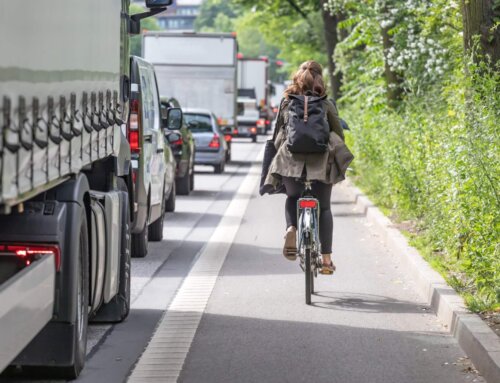
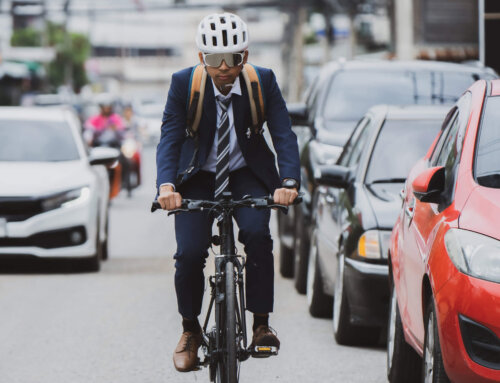
Many of the features introduced in modern cars are designed to protect drivers and passengers. While these features often also improve road safety for vulnerable road users, such as pedestrians and cyclists, the opposite is sometimes true.
For example, the lack of an engine in electric cars means that they are generally far quieter than those fuelled by petrol or diesel. So, pedestrians and cyclists may be unaware of each other’s presence, increasing the risk of a collision.
When a collision occurs, the significant weight of an electric car means that a cyclist or pedestrian may suffer more severe injuries than if hit by a petrol or diesel vehicle.
Does modern vehicle technology make roads safer overall?
On balance, technological advances appear to have had a positive impact on road safety. There’s an important caveat, though: over-reliance on technology can have the opposite effect.
The importance of remaining alert when behind the wheel or on the road cannot be overstated. In the aftermath of a serious accident in San Francisco, in which a Tesla car fitted with full self-driving mode (FSD) technology was alleged to have played a part, the police were quoted as reporting that, if the technology had indeed failed, it was the duty of the driver to take over control of the car immediately.
Tesla has repeatedly emphasised the importance of active driver supervision, stressing that drivers must remain attentive and ready to take over at all times.
Summary in a nutshell
Ultimately, the points are straightforward.
- Technology is there to assist, not replace, humans.
- However, if drivers switch off whilst at the wheel, they risk causing accidents that not only hurt themselves but also other road users.
- On the other hand, if we use technology to help us rather than rely on it, it will help make our roads safer and reduce the risk of being the cause of a road traffic accident.
If you’ve been injured in a road accident and want to talk things through, our team at Mooneerams is always happy to help. Call us on 029 2199 1927 or fill in the form on the right-hand side of this page, and send it to us.

Posted in Road Traffic Accidents