

A recent factory fire in Oldbury, in the West Midlands, led to residents being warned not to sweep or vacuum debris because of possible asbestos concerns.
According to a report in the Sun newspaper, the building may have had an asbestos cement roof. After the fire, local people were told to keep away from debris, leave any ash alone where possible, and avoid doing anything that might put dust into the air.
For anyone reading that story, it raised the obvious question:
How can asbestos still be a problem when it was banned years ago?
It is a valid question. The use of asbestos was fully banned in the UK in 1999. Blue and brown asbestos were banned earlier, in 1985. Yet asbestos has not disappeared. It is still present in many older buildings, including factories, schools, hospitals, council buildings, offices, shops, industrial premises and homes.
That is why asbestos exposure in old buildings remains an issue today.
The risk no longer comes from asbestos still being fitted into new buildings. The greater problem is that so much asbestos remains hidden in buildings constructed or refurbished before the ban came into force.
Why is asbestos still found in old buildings?
For much of the 20th century, asbestos was used widely in construction and industry. It was cheap, strong, heat-resistant and useful for insulation and fire protection.
It could be found in:
- asbestos cement roofing sheets
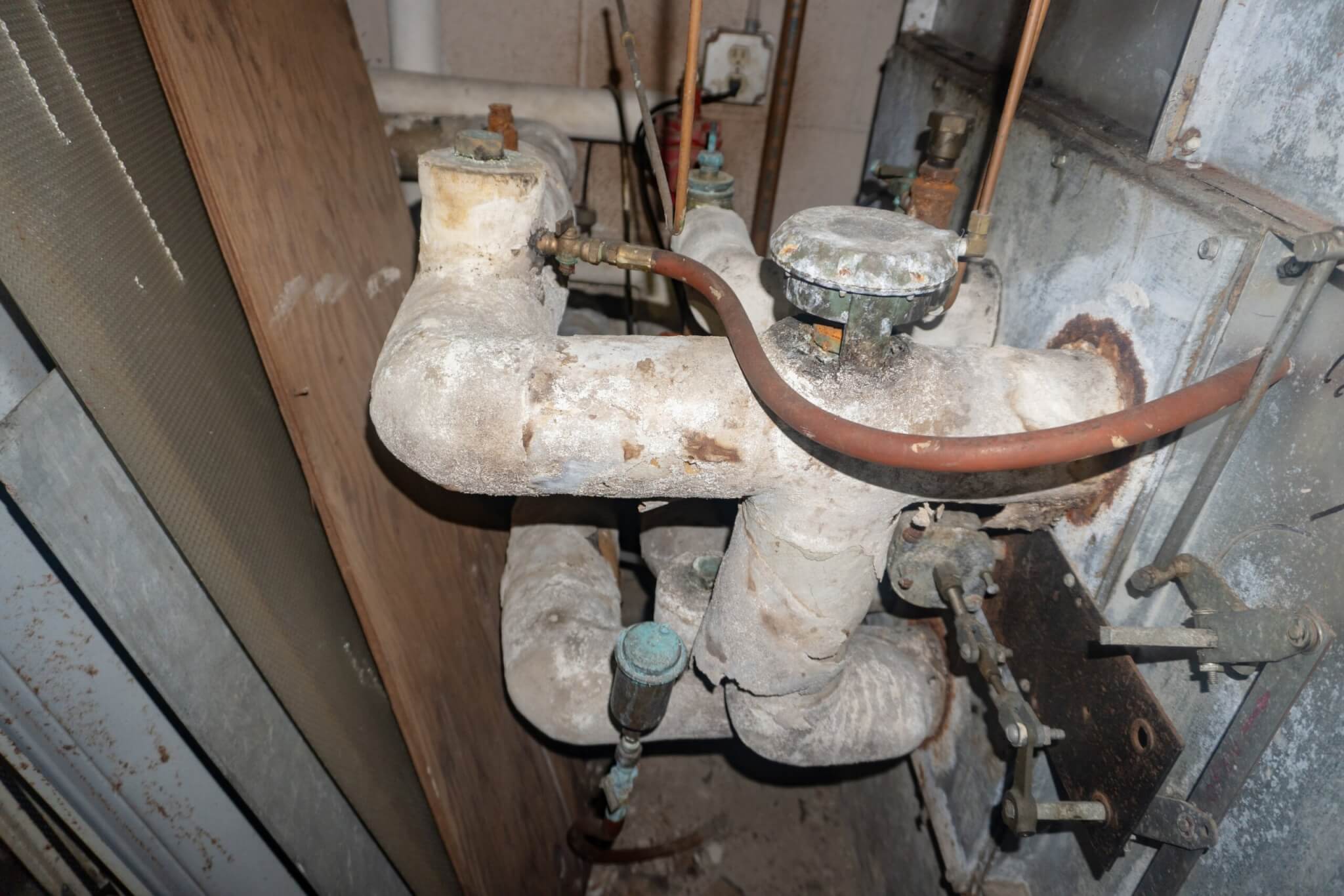
- pipe lagging
- insulation boards
- ceiling tiles
- floor tiles
- textured coatings
- boiler rooms
- fire doors
- wall panels
- old plant and machinery
- industrial buildings and factories
In many buildings, asbestos was installed decades ago and has remained there ever since.
This does not mean every old building is unsafe. Asbestos is usually most dangerous when asbestos-containing materials are damaged or disturbed, allowing asbestos fibres to become airborne. For a while, the consensus has been that it is safer to leave undamaged asbestos in old buildings than to remove it.
If asbestos is left undamaged in good condition and properly managed, the risk of exposure may be low. The danger comes when it is drilled into, cut, sanded, broken up, damaged by fire, disturbed during refurbishment, or removed by people who do not know what they are dealing with.
That is why maintenance work, demolition work, building repairs, plumbing, electrical work and renovation jobs can all carry a risk if asbestos has not been identified first.
Why can fire make asbestos concerns more urgent?
The Oldbury fire is a useful reminder of a wider point.
Where a building contains asbestos materials, a fire may damage roofing sheets, panels or other materials. Debris might then land nearby. The concern is not simply that asbestos exists. The concern is what may happen if fragments are broken up, handled roughly, swept, or vacuumed, which can create asbestos dust particles. When they become airborne, they can be easily inhaled, and once they enter the body, they remain undetected for years.
Hence the public health warnings to local residents living near the factory in Oldbury not to sweep away any debris that had fallen onto their homes during the blaze.
Can asbestos exposure in old buildings cause illness years later?
Yes, it can. However, it is highly unlikely that you would develop any of the asbestos-related illnesses from breathing in asbestos fibres on one occasion. The likelihood of getting asbestos disease increases with continued exposure over months and years. The amount of exposure is also relevant to whether someone ultimately develops the illness.
What is the latency period in relation to asbestos exposure?
One of the most difficult things to understand about asbestos disease is something called the ‘latency period’. This is the time between asbestos exposure and the onset of the disease.
In the case of asbestos-related illnesses, that delay can be very long indeed. It is often decades. Someone may have worked with or near asbestos in the 1960s, 1970s or 1980s and only be diagnosed many years from the date of exposure.
This is why asbestos disease claims are different from many other personal injury claims. It’s also why people who worked with asbestos in the past, or in an environment where exposure was rife, are only now being told that they have an asbestos disease.
What asbestos-related diseases can lead to a claim?
There are several asbestos-related diseases that may give rise to an asbestos compensation claim.
Mesothelioma is a cancer most commonly affecting the lining of the lungs. It is usually caused by asbestos exposure. There were 2,218 deaths from mesothelioma in the UK in 2024/2025.
Asbestosis is a chronic lung condition caused by scarring of the lungs after heavier or repeated exposure to asbestos fibres. It can cause breathlessness and tends to worsen over time.
Asbestos-related lung cancer is lung cancer caused or contributed to by past asbestos exposure.
Diffuse pleural thickening affects the lining of the lungs. It can restrict lung function and cause breathlessness.
Is exposure alone enough to make a claim?
No, and this is an important point to emphasise.
Being exposed to asbestos does not automatically mean someone has a claim for asbestos disease compensation. There needs to be a diagnosed asbestos-related condition.
That diagnosis is the point at which the legal position changes. Before then, a person would understandably be worried about getting asbestos disease if they know they worked in places where asbestos was present. But worry alone, without a recognised injury or illness, is not enough to bring a successful personal injury claim.
That said, if you have symptoms and believe you may have been exposed to asbestos in the past, you should tell your GP, so that if symptoms of asbestos disease develop later, your medical history will confirm your relationship with asbestos in your former working life.
Could you still make a claim years later?
Yes, you may be able to.
This is one of the questions people ask most often:
“Asbestos exposure in old buildings: could you still make a claim years later?”
The answer is that many asbestos disease claims are brought years, and often decades, after the exposure took place.
The usual time limit for bringing a personal injury claim is three years. With asbestos claims, the time limit often runs from the date of diagnosis or the date the person had knowledge that their condition may be linked to asbestos exposure.
That does not mean every case is straightforward. Time limits can be a difficult area, especially where someone had earlier symptoms, previous investigations, or a prior diagnosis such as pleural plaques.
However, you should not assume that you are too late simply because the exposure happened a long time ago. With asbestos-related diseases, that is often exactly how the cases arise.
The safest approach is to get legal advice from an experienced asbestos disease lawyer as soon as possible after diagnosis.
What if the employer no longer exists?
This is another common worry for people with asbestos disease who are thinking of bringing a claim.
Many people were exposed to asbestos while working for companies that no longer trade. Some have closed. Some have merged. Some changed names several times. Some were small firms with poor records.
However, the fact that a firm has ceased to exist does not necessarily prevent an asbestos claim from being successful.
In many asbestos claims, the claim is not paid directly by the old employer. It is dealt with by the employer’s liability insurer for the company for the period during which the exposure occurred.
Specialist asbestos claims solicitors will often investigate old employment records, Companies House records, insurance records, witness evidence and historic information about particular workplaces or industries to trace the company and, if possible, the identity of the insurers.
It is not always possible to trace an insurer. But surprisingly it often is.
So, again, do not rule out a claim just because the company has disappeared or you don’t think they’ll have relevant insurance.
Where might asbestos exposure have happened?
Many asbestos claims involve people who worked in heavy industry, construction, shipyards, factories, power stations, steelworks, railway works, engineering, plumbing, electrical work, carpentry, demolition or maintenance.
But exposure was not limited to people who handled asbestos directly.
A person may have worked near others who were cutting, drilling, removing or disturbing asbestos materials. A cleaner, labourer, apprentice, teacher, caretaker, factory worker, or office worker could have been exposed if asbestos dust was present in the workplace.
What should you do if you think you were exposed to asbestos?
If you believe you were exposed to asbestos in the past, the first thing to say is this: try not to panic.
Not everyone exposed to asbestos develops an asbestos-related illness.
But if you have symptoms such as breathlessness, a persistent cough, chest pain, unexplained weight loss or ongoing fatigue, you should seek medical advice. Tell your GP about any known or suspected exposure to asbestos, even if it happened many years ago.
It may also help to start writing things down while they are still clear in your mind.
Make a note of:
- where you worked
- the names of former employers
- job titles and duties
- building sites or factory names
- approximate dates
- the type of work being carried out nearby
- whether asbestos lagging, boards, roofing sheets or insulation were present
- the names of former colleagues
- whether anyone else from the same workplace developed an asbestos-related condition
You do not need to have every answer before speaking to a solicitor. In many cases, people only have fragments of information at the start. That is normal.
A good asbestos solicitor will help piece together the history.
Why is it important to seek early legal advice after an asbestos disease diagnosis?
Receiving an asbestos disease diagnosis is frightening. Legal advice may not be the first thing on your mind. That is understandable.
But it is worth speaking to someone sooner rather than later. Evidence takes time to gather, and the sooner the process is started, the better, while former colleagues can still be traced. It also helps to avoid any difficulty with the three-year time limit.
A claim is not just about compensation for pain and suffering, although that is part of it. It may also cover loss of earnings, care, treatment costs, travel expenses, adaptations, and financial support for dependants where appropriate.
In some cases, families may also be able to continue with, or bring, a claim after someone has died from an asbestos-related disease.
Asbestos may be banned, but the problem has not gone away
The story of asbestos is not only a story about the past.
Asbestos has been banned in the UK for more than 25 years. Yet asbestos-related diseases are still being diagnosed. People are still living with the effects of exposure to asbestos fibres in factories, schools, hospitals, industrial sites, public buildings, and homes long ago.
If you or a family member has been diagnosed with an asbestos-related condition, it is sensible to get specialist advice from an experienced asbestos claim solicitor. Even if the exposure happened decades ago. Even if the employer no longer exists. Even if you are unsure where the exposure took place.
At Mooneerams Solicitors, we work in partnership with a highly experienced asbestos disease claims solicitor who is an expert in all aspects of asbestos disease claims. If you are worried about a diagnosis or want to know whether a claim may still be possible, we can help you take the next step and make sure you receive the right advice.
Call Mooneerams on 029 2199 1927 or contact us via our online enquiry form, and we’ll get back to you as soon as we receive it.

Posted in Asbestos Disease, News, Personal Injury Claims