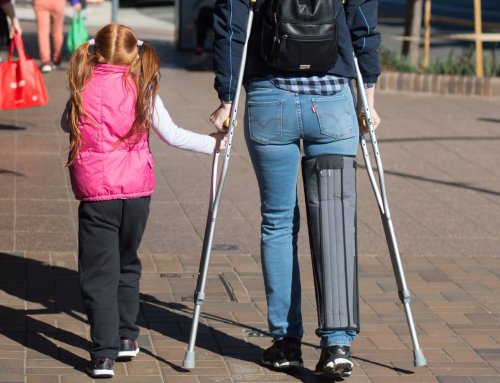


This week, 18th to 24th of May, marks Action for Brain Injury Awareness Week, an annual campaign led by Headway, the UK’s leading brain injury charity. The aim is to bring survivors, families, clinicians, and charities together to raise awareness of brain injury and the significant challenges it creates.
This year’s campaign, ‘We See You’, focuses on the isolation and loneliness many brain injury survivors and their families grapple with every day.
Action for Brain Injury Awareness Week is a timely reminder that claims involving brain injuries are often among the most complex cases brain injury solicitors deal with. They require careful handling to ensure the client receives the compensation they need to rebuild their lives after their accident.
What are the most common causes of brain injuries?
Headway estimates that someone in the UK is admitted to hospital with a brain injury every 90 seconds. Brain injuries can be caused by an event as seemingly mundane as a slip on a wet floor or as catastrophic as a high-speed road traffic accident.
Although road traffic collisions still account for around 20,000 traumatic brain injury (TBI) casualties on Britain’s roads each year, falls have now overtaken Road Traffic Accidents as the leading accidental cause of brain injury in high-income countries, causing twice the number of TBIs compared to road traffic accidents.
How do brain injuries affect the lives of victims and their families?
At the most serious level, brain injuries can be fatal or leave the survivor in a coma, a persistent vegetative state, or a minimally conscious state, sometimes for the rest of their life.
Others are left with profound physical disability, such as paralysis, loss of speech, inability to swallow, loss of sight or hearing, or epilepsy that may never be fully controlled. In these cases, the sufferer may require round-the-clock care.
Many more survivors experience less severe but still debilitating effects, such as mobility problems, chronic fatigue, balance and coordination difficulties, headaches, sensory changes, and hormonal imbalances arising from damage to the pituitary gland.
Memory loss, slowed information processing, attention and concentration issues, and difficulties with planning, problem-solving, and decision-making can impact a sufferer’s education, employment, and day-to-day independence. Even where the body appears to have largely recovered, the effects on the brain can be long-lasting or permanent.
The impact of a TBI is never limited to the sufferer themselves.
Family members and friends often take on lifelong caring roles, frequently at the cost of their own careers, health, and relationships.
While many survivors describe losing the person they were, their loved ones describe the feeling of grieving someone who is still alive.

When can you claim compensation for a brain Injury?
To bring a personal injury claim for a brain injury, the incident that caused the injury must have been caused by a third party’s negligence. Examples of cases in which this might be established include:
- A driver pulls out of a side road without looking and hits a cyclist.
- A scaffolder falls four storeys because his employer did not provide edge protection or a harness.
- A shopper slips on a wet floor in a supermarket and bangs their head.
- A motorcyclist is knocked off their bike when a driver opens a car door into his path.
- A care home resident with a known falls risk is left unsupervised on a stairwell and tumbles to the bottom.
It doesn’t always matter that the injured person may be partly at fault for their injuries. Where a claimant is found to have been contributorily negligent, for example a motorcyclist not wearing a helmet or a pedestrian who crosses the road away from a designated crossing, their claim can still succeed, although their compensation may be reduced to reflect their share of responsibility.
Why are traumatic brain injury claims so complex?
There are several reasons why claims arising from a brain injury are among the most demanding in personal injury law. They include:
Prognosis can take months or years
The final impact of a TBI is often not known for months or years after the event, which means that a claim cannot be finally resolved for some time. Settling a case before the true extent of the impact is known risks leaving the claimant undercompensated, since they cannot go back and claim further damages if it transpires that the harm is more extensive than initially thought (with some exceptions).
Part of a brain injury solicitor’s job is to ensure that their client receives the rehabilitation and care they need while the claim is ongoing, and that they are not financially disadvantaged pending its resolution. This can often be achieved by obtaining interim payments, i.e. payments on account, from the insurers of the person who caused the accident.
Brain injury claims require evidence from multiple experts
Most personal injury claims require the input of medical experts, but the extent of that evidence in brain injury claims is particularly large. The solicitors will need to call on the expertise of consultants across fields as diverse as neurology, radiology, psychiatry, and endocrinology, all of whom must assess the patient and provide their opinions on key issues including the cause of the injury and its likely long-term impact on their client.
Coordinating the evidence requires ensuring that each expert receives the right instructions, the right records, and often the input of the other experts to ensure their reports align and support the client’s case.
Calculating brain injury compensation can be difficult
Compensation in personal injury claims is made up of two components, known as general and special ‘damages’.
General damages compensate the claimant for their pain, suffering, and loss of amenity.
Special damages compensate them for their financial losses.
General damages can be particularly difficult to pitch in brain injury cases. The Judicial College Guidelines provide brackets for damages, ranging from a few thousand pounds for minor head injuries to several hundred thousand for the most severe cases.
The ranges within each bracket are wide, and each case depends on the claimant’s individual circumstances.
Finding genuine equivalents is hard, since no two brain injuries are alike. A claimant with the same injury as another may have an entirely different experience of how the injury affects them.
Cognitive and behavioural losses are especially tricky to quantify, because they are invisible to a stranger.
Special damages include medical bills, travel costs, loss of earnings, and care costs, amongst many other costs depending on the injured person’s needs.
Where a claimant has only travelled to a couple of medical appointments and lost a few months’ wages, calculating these damages is straightforward.
However, when a claimant suffers a catastrophic brain injury, the picture is very different. They may be unable to return to work for some time, if at all. As a result, they have not simply lost a chunk of their wages. They will potentially lose their entire career, including bonuses, pension contributions, employer benefits, and any potential promotions. In such cases, the services of an accountant are needed to work out what the claimant would have earned had the accident not happened.
Add to that the cost of lifelong professional care, buying or adapting a home suitable to the accident victim’s needs, replacing wheelchairs and equipment on an ongoing basis, and paying medical and therapy costs indefinitely, and the special damages in a serious brain injury claim can easily run into millions of pounds in damages alone.

What if a claimant lacks capacity to bring their own claim
Where a head injury is particularly severe, the claimant may lack capacity to conduct the litigation or manage their own affairs.
In these cases, their brain injury compensation claim must be brought through a litigation friend, any settlement must be approved by the court, and damages must usually be administered through the Court of Protection or a personal injury trust. This is all very doable, but it adds a layer of complexity that is not present in most accident claims.
How can Mooneerams Solicitors help following an accident causing brain injury?
If all that sounds complicated, let alone daunting, that’s because it is.
That’s the reason appointing an experienced firm of brain injury solicitors, such as Mooneerams, is so important if a loved one suffers a traumatic head injury in an accident that wasn’t their fault. Just appointing the right solicitors will lift a huge weight from your shoulders.
The solicitor will liaise with medical experts, deal with insurers, prepare the documentation, handle the entire claims process, and ensure the maximum possible settlement is obtained to help rebuild lives.
With timely rehabilitation, a skilled support team, and the right adjustments at home, many head injury survivors go on to live full and meaningful lives.
They return to work, raise their families, and take part in the hobbies they enjoyed before their accident. For those whose injuries are too severe for that kind of recovery, compensation cannot turn back the clock. What it can do is fund the lifelong care, therapies, equipment, and adapted accommodation that provide survivors and their families with financial security and give them the chance to live with dignity and as much independence as possible.
If you or someone close to you has suffered brain injury in an accident caused by another person or organisation, getting the earliest possible legal advice from specialist brain injury solicitors is important. For obligation-free initial advice, call Mooneerams on 029 2199 1927 and speak with us in complete confidence. We handle most brain injury claims on a No Win No Fee basis.

Posted in Personal Injury Claims