
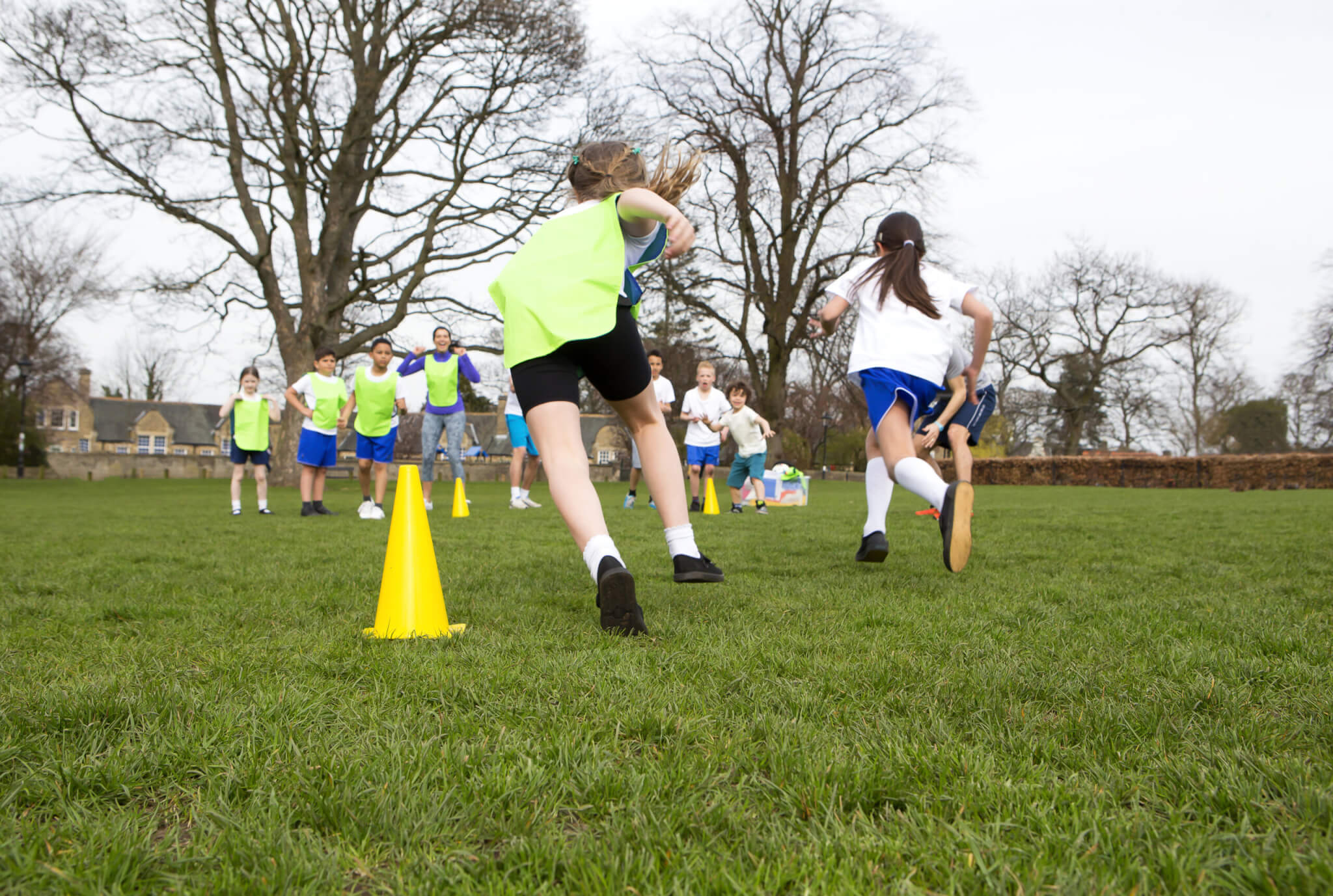
It has been well established that children need to stay active. Doing so helps to keep their physical and mental health in good order. Taking part in sport helps them build confidence, friendships and resilience. It also sets the tone for a healthy lifestyle later on in their lives.
A 2025 study by Manchester Metropolitan University working in tandem with the Youth Sport Trust found that regular sport boosts well-being and encourages children to stay active as they grow.
The report also highlights that sports help counteract the challenges presented by excessive screen use and other sedentary activities. It also helps combat loneliness, which the Manchester-based survey found that 7.2% of children surveyed said they felt all the time.
Therefore, the case for our kids staying active both at school and outside of it is well founded.
Taking part in sport isn’t risk-free. Most pupils will pick up the odd bruise or grazed knee during a PE lesson or a game of football in the playground. These kinds of knocks are usually just part and parcel of playing games in childhood.
Occasionally, an accident at school involves more than just a tumble. Broken bones, concussions, or other serious injuries require a child to miss school, undergo ongoing medical treatment, and, in some cases, suffer the lasting consequences of a school injury.
When this happens, it raises a difficult but important question: can parents bring claims for compensation due to their child’s accident?
The answer to this question depends on whether the accident resulting in the injury was caused by the school’s negligence or was nobody’s fault.
At Mooneerams, we act only for claimants in personal injury cases. Our personal injury solicitors have helped families recover millions of pounds in compensation, and we can advise you on whether a claim is possible if your child has suffered an injury at school.
What types of sports injuries happen in schools?
The injuries children suffer during PE and sports are wide-ranging in their nature. Some of the more common ones include:
- Sprains and strains from running or twisting awkwardly.
- Broken bones after a fall from equipment or suffering a heavy tackle (in football, rugby or hockey – in other words, in contact sports).
- Concussions and other head injuries often occur from contact sports or collisions with another participant in any team sport.
- Cuts and lacerations, especially if equipment is faulty or playing surfaces are unsafe.
- Bruises from slips, trips and falls.
- Serious injuries such as brain or spinal injuries are thankfully rare, but often life-changing when they occur.
When might a school be responsible?
Not every accident that takes place on school grounds will result in a claim being made. Children are naturally energetic, and schools can’t prevent every bump, collision or fall. However, they do owe a duty to take reasonable care to prevent the children from suffering foreseeable injury.
Examples of negligence in school sports might include:
- Allowing children to use faulty or unsafe equipment.
- Failing to provide proper safety gear such as helmets, pads or mats.
- Poor supervision during PE or after-school activities.
- Unsafe set-up of games – for instance, placing hurdles or cones too close to walls.
- Damaged or uneven playing fields leading to preventable slips, trips and falls.
If an accident occurred because a school did not meet its legal obligations, you may be entitled to pursue a claim for compensation on your child’s behalf.

What about school trips and sports events outside the classroom?
A school’s responsibility doesn’t stop at the gates. Whether pupils are at a local park for athletics, on a bus travelling to a football match, or even on a residential trip, the school still has a legal duty to keep them reasonably safe.
If your child suffers an injury on a school trip because of poor supervision, unsafe transport, or dangerous facilities, you may be able to bring a school accident claim.
For example:
- A child suffers a fractured ankle during an unsupervised activity at a residential centre.
- A road traffic accident involving the school team bus on the way to a tournament causes multiple injuries.
- A faulty goalpost at another school’s sports ground collapses.
In each of these cases, the key question is whether the school (or those responsible for the trip) failed in their duty of care.
What is the law? Duty of care and the Occupiers’ Liability Act 1957
Schools and local authorities are expected to follow strict health and safety rules. Under the Occupiers’ Liability Act 1957, they must take reasonable care to ensure that pupils and visitors are safe when on school premises.
This includes:
- Carrying out regular risk assessments.
- Maintaining sports halls, playgrounds and fields.
- Ensuring any hazards (like wet floors or loose equipment) are dealt with quickly.
If these standards are not met and a child is injured, the school or local authority could be held liable.
Can parents bring a claim for their children?
Yes. A child under 18 cannot make a claim themselves, but a parent or guardian can act as their litigation friend. This means you make decisions on their behalf – such as whether to accept a settlement.
If no claim is made during childhood, your son or daughter can start their own case once they turn 18. They have until their 21st birthday to do so. But it’s usually better to act sooner. Evidence is easier to gather when the accident is still fresh in the mind, and medical experts can give a clearer view of the long-term effects of the injuries sustained.
What compensation can be claimed?
Compensation is intended to put your child back, as far as money can, in the position they would have been if the accident hadn’t happened. The legal term for this is damages, which are usually split into two types:
- General damages – for the pain, suffering, and loss of enjoyment of life caused by the injury.
- Special damages – for financial losses linked to the injury, such as:
- Travel costs to hospital appointments.
- Medical treatment and prescriptions.
- Rehabilitation or therapy.
- Loss of your earnings if you’ve had to take time off work to care for your child.
- Home or vehicle adaptations if needed.
The amount your child may receive depends on the severity of the injury and its impact on their education, social life, and future prospects.
What are the time limits to bring a claim?
In most personal injury claims, adults have three years from the date of the accident to start court proceedings. For children, the three-year time limit does not begin until their 18th birthday, giving them until they are 21 to bring a claim.
That said, waiting until then is rarely a good idea. By acting early, you improve your child’s chances of success. Witnesses may move away, memories fade, and CCTV footage might no longer be available.
What happens to the compensation?
If your child’s claim succeeds, the money is placed in a special court account until they turn 18. The funds are kept safe, and interest is added. If you need access earlier – for example, to pay for extra tutoring or specialist care – you can apply to the court for part of the money to be released.
No Win No Fee school accident claims
We understand that parents may worry about the cost of legal action. That’s why our medical negligence team and personal injury solicitors handle most school accident claims under a No Win No Fee agreement.
This means:
- You don’t pay anything upfront to start the claim.
- If the claim does not succeed, you won’t have to pay our fees.
- If the claim is successful, our costs are taken as a capped percentage of your child’s compensation.
A No Win No Fee agreement makes the process far more accessible for families. It also means we’ll only take on your case if we believe it has strong prospects of success.
Why does bringing a claim matter?
Of course, no amount of money can undo the distress of seeing your child injured. But a claim for compensation can make a real difference. It can cover the cost of treatment, help your child get the support they need, and ease the financial pressure if you’ve had to take time off work.
Bringing a claim can also encourage schools to take their duty of care seriously, raising standards of health and safety and reducing the chances of another child being hurt in the same way.
How Can Mooneerams Solicitors help you?
At Mooneerams, we understand how upsetting it is when your child has suffered an injury at school. We’ll listen to your story, explain your options clearly, and guide you through each step of the claims process.
If your child has suffered injury in a sports accident at school, the best way to get answers to the questions you want to ask, is to speak with a specialist solicitor.
Mooneerams offer a no-obligation initial consultation and, if you decide to go ahead, in most cases we can act for you on a No Win No Fee basis.
If your child has been hurt in a school accident, on a school trip, or during PE, call us today. Our team will advise you on whether your family is eligible to make a claim for compensation and how we can help secure the right outcome for your child.

Posted in Personal Injury Claims