

You bend down to lift a heavy object at work, and feel a sudden, sharp pain in your back. You experience a spasm, the pain shoots down your leg, and you are unable to straighten up or walk without feeling in agony.
Back pain is often derided as a ‘shirker’s injury’. It’s nothing of the sort! A back injury can impact nearly every aspect of everyday life, from working and socialising to exercising and driving. Some back injury sufferers struggle to walk, sleep, or even sit down because of the pain. Others may even lose their independence entirely for a while, because they are unable to move on their own account.
After succumbing to a back injury, your thoughts should be about getting the medical attention needed to ease your discomfort. However, when the dust settles, your mind will probably turn to why the accident happened and whether anyone was to blame, other than you.
An employee who has injured their back at work may be able to bring a claim for compensation from their employer. They may do this even if they were partly to blame for the accident. We’ll tell you why and how, further on in this article.
When does a manual handling accident end up as the reason for bringing an accident at work claim?
Before we answer this question, let’s look at back injury at work accidents and ask:
- How common are they?
- What are the different types of back injury?
- What duty of care (if any) does your employer owe you?
How common are back injuries from lifting at work?
Work-related back injuries are common. In 2023/2024, 232,000 workers in Great Britain were suffering from work-related back problems. Handling, lifting, and carrying are the second most common causes of non-fatal injuries at work. The most common causes are slips, trips, and falls.
In the same year, 7.8 million working days were lost due to musculoskeletal problems, including those involving the back.
What are some common types of back injuries caused by lifting heavy objects at work?
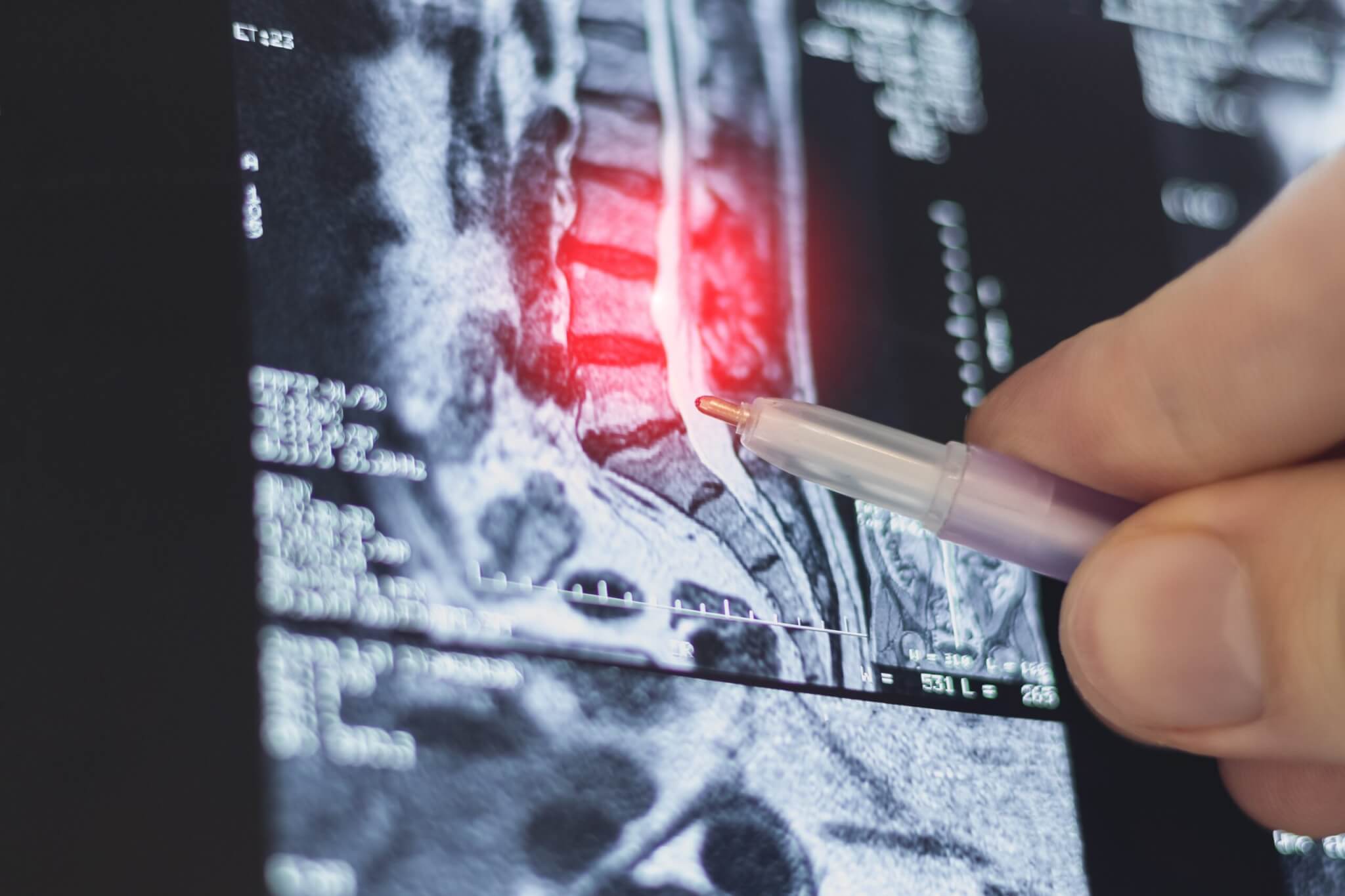
The range of back injuries that can be caused by lifting at work is wide. Some are acute and happen suddenly, while others are chronic and develop over a long period.
Some common types of back injuries caused by lifting at work are:
-
Herniated discs
Better known as ‘a slipped disc’, this injury occurs most often in the lower back. It is caused by a spinal disc slipping or protruding and pressing on the person’s nerves. It can be caused by lifting, pushing, or pulling heavy objects.
-
Muscle strains
Muscle strains are small tears in the muscles or tendons in the back. They can be caused by overexertion when lifting heavy objects or using an improper technique.
-
Ligament sprains
Ligament sprains occur when the ligaments that stabilise the spine are stretched or torn. They can happen when a person lifts a heavy load or twists while lifting.
-
Fractures
Lifting heavy loads can cause fractures in the vertebrae, which are incredibly painful.
-
Chronic back pain
Chronic back pain is back pain that persists for longer than three months. It can be caused by repeated lifting of heavy objects.
What are my employer’s duties regarding employees lifting heavy objects at work?
Employers owe a duty of care to keep their employees safe while in the work environment. This includes protecting employees from the risk of injury from lifting heavy objects. If your employer breaches their duty of care and you suffer harm as a result, you can bring a personal injury claim against them.
Employers must also comply with the Manual Handling Operations Regulations 1992, an Act of Parliament. They reveal how employers should protect the health and safety of workers involved in handling heavy objects.
To meet their duty of care to you and follow the Manual Handling Regulations, your employer may need to:
- Prevent the workforce from having to lift heavy objects wherever possible. This might involve re-planning tasks so that lifting heavy objects is not required. Alternatively, automating the process, for example, by using a chute or pallet truck, gets rid of the need for employees to lift anything.
- Assess the risk involved in lifting heavy objects where the task cannot be redesigned. Your employer should consider factors such as how often its employees would need to lift heavy objects, how far they would need to move them, and any specific hazards, such as uneven flooring or poor lighting. The level of risk assessment required depends on the task involved. Tasks that pose a higher risk need a more detailed assessment.
- Reduce the risk of injury. For example, if the load is extremely heavy, your employer might be expected to break it into smaller loads, or if the floor is uneven, they might be expected to fix it before expecting employees to undertake the task.
- Provide ongoing, targeted training to employees on how to lift heavy loads safely and any safety precautions they should take.
While an employer’s legal duties regarding the safety of their employees are wide, they are not absolute. Crucially, an employer is only obliged to carry out risk assessments where the activity in question carries a real and foreseeable risk of injury. If it does not, an employer may not be in breach of their legal obligations for failing to conduct a risk assessment.
Our personal injury solicitors will assess the facts of your case and advise on whether your employer complied with their legal obligations to keep you safe at work.
When does poor manual handling become a claim?
Some back injuries are caused or made worse by the employee’s own actions. Are you entitled to compensation from your employer if, for example, you lifted a heavy load improperly? When does poor manual handling become a claim?
Employers cannot assume that their employees will behave safely. Part of the purpose of regulations such as the Manual Handling Operations Regulations 1992 is to force employers to take looking after their employees’ safety seriously. That said, the court will look at the overall facts of the case before deciding whether an employer breached its legal duties.
Take, for example, the case of a care assistant who made a personal injury claim against her employer when she injured her back moving a child’s wooden bed.
When deciding that the employer was not responsible for the injury, the court considered:
- The care assistant had received extensive experience and training.
- Her attendance at a relevant course was only ten months prior to her accident.
The court also said that making employers assess every routine and low-risk task would not be practical.
In some cases, both employee and employer may be partially to blame for an injury. If this looks like the situation in your case, your employer is likely to raise the issue of ‘contributory negligence’.
Should your employer succeed in proving that you were partly responsible for your injury, you will still receive compensation. However, the amount will be reduced by the percentage for which you were to blame.
How much compensation is there for a back injury caused by lifting at work?
If your back injury claim succeeds, you’ll receive general damages to compensate you for your pain, suffering, and loss of amenity, and special damages to cover any financial losses.
The amount of general damages awarded will be based on factors unique to your case. No two personal injury cases are ever the same.
Putting a figure on the amount of compensation you might be awarded before medical reports have been obtained is impossible. The report will give an idea of how serious the injury is and how long it is likely to be before you recover from it.
The court and both your solicitors and the Defendant’s – your employers insurance company’s solicitors will consider the nature of your injury, how long it will take you to recover (assuming it’s not permanent), and how it has affected your daily life.
Our experienced solicitors will get advice from a medical expert who will consider:
- the severity of your injury,
- how it occurred, and
- your prognosis.
The medical expert then produces a report of their findings, which, with your approval, will form the basis of your injury claim.
Your special damages cover the financial losses your injuries caused, such as loss of earnings and the cost of any private medical treatment you may need.
How can Mooneerams help?
Our expert personal injury solicitors understand how uncomfortable back problems can be.
We will do all we can to hold your employer to account and secure the compensation you deserve.
In the meantime, we’ll do our best to get you access to the treatment and rehabilitation you need whilst you wait for the settlement of your claim, by asking for an interim payment from your employer’s insurance company.*
Most of our clients claims settle without them having to attend court. We usually act for our clients on a No Win No Fee basis, so you can pursue the compensation you’re entitled to without worrying about paying our fees upfront. You only pay us if you win. If your claim is unsuccessful, you usually pay us nothing.
Call Mooneerams solicitors on 029 2199 1927 for initial, informal legal advice on what to do if you are suffering a back injury which was caused by a workplace accident.
*We can only get interim payments in cases where your employer has admitted liability for causing the accident or a judge at court has decided they are liable, but it’s too early to settle the injury claim as the full extent of your injuries is still unclear.

Posted in Accidents at Work, Personal Injury Claims