

After an accident, few people immediately think about how they will prove what happened. Their priorities are usually getting medical help, dealing with the shock and making sure everyone is safe.
Not taking photographs or obtaining witness details at the scene does not automatically prevent a personal injury claim. However, where the other side disputes your account, you will need enough reliable evidence to show that your version of events is more likely than not to be correct.
That evidence may include photographs, CCTV, witness accounts and accident reports. It may also include documents and technical records obtained later by your solicitor.
This article explains what must be proved, which types of evidence may help and what can be done when the person, business or insurer involved gives a different account of the accident.
What must you prove in a personal injury claim?
In most negligence claims, you must establish that:
- The other person, business or organisation owed you a legal duty to take reasonable care.
- They failed to meet the standard of care reasonably expected in the circumstances.
- That failure caused or materially contributed to your injury and resulting loss.
The precise legal duty will depend on how and where the accident happened. A driver, employer, occupier and local authority may each have different responsibilities.
Personal injury claims are decided using the civil standard of proof, known as the balance of probabilities. This means showing that your account of what happened is more likely than not to be correct.
You do not have to establish every detail with absolute certainty or provide a perfect account of every second. The question is whether the evidence, considered as a whole, makes your version of events more probable than the other side’s.
What evidence can help prove who was at fault?
There is no single type of evidence that must be available in every claim. In most cases, several different pieces of evidence combine to build a reliable picture of what happened.
Photographs, videos and camera footage
Photographs and videos can record conditions at the scene before anything is cleared away, repaired or moved. Depending on the type of accident, useful images might show:
- faulty machinery or damaged equipment in an accident at work
- a spillage or other hazard in a shop
- a defective pavement or broken step
- damage to the vehicles involved in a collision
- the final position of the vehicles
- road markings, signs, weather conditions or visibility
CCTV, dashcam footage, doorbell cameras and mobile phone recordings may provide an independent view of the accident. They can be particularly useful where the people involved give different accounts, although the footage must still be considered alongside the other available evidence.
CCTV retention periods vary, and some systems overwrite recordings after only a short time. Relevant footage should therefore be identified and preserved as soon as possible.

Witness evidence
An independent witness can be particularly helpful where the people directly involved give different accounts of the accident.
Their evidence is not automatically decisive. Its value will depend on matters such as:
- where the witness was positioned
- how much of the incident they saw
- whether their view was obstructed
- how clearly they remember what happened
- whether their account has remained consistent
- how well their evidence fits with the other available information
Where possible, obtain the witness’s full name and contact details. A solicitor can contact them later and, where appropriate, take a formal witness statement.
Witnesses may move home, change telephone numbers or become harder to trace as time passes. Memories can also fade, so it is sensible to record their details as soon as possible.
The absence of an independent witness does not automatically prevent you from bringing a claim. Your own account is evidence, and it may be supported by photographs, records, digital information or other surrounding circumstances.
Accident books, incident reports and official records
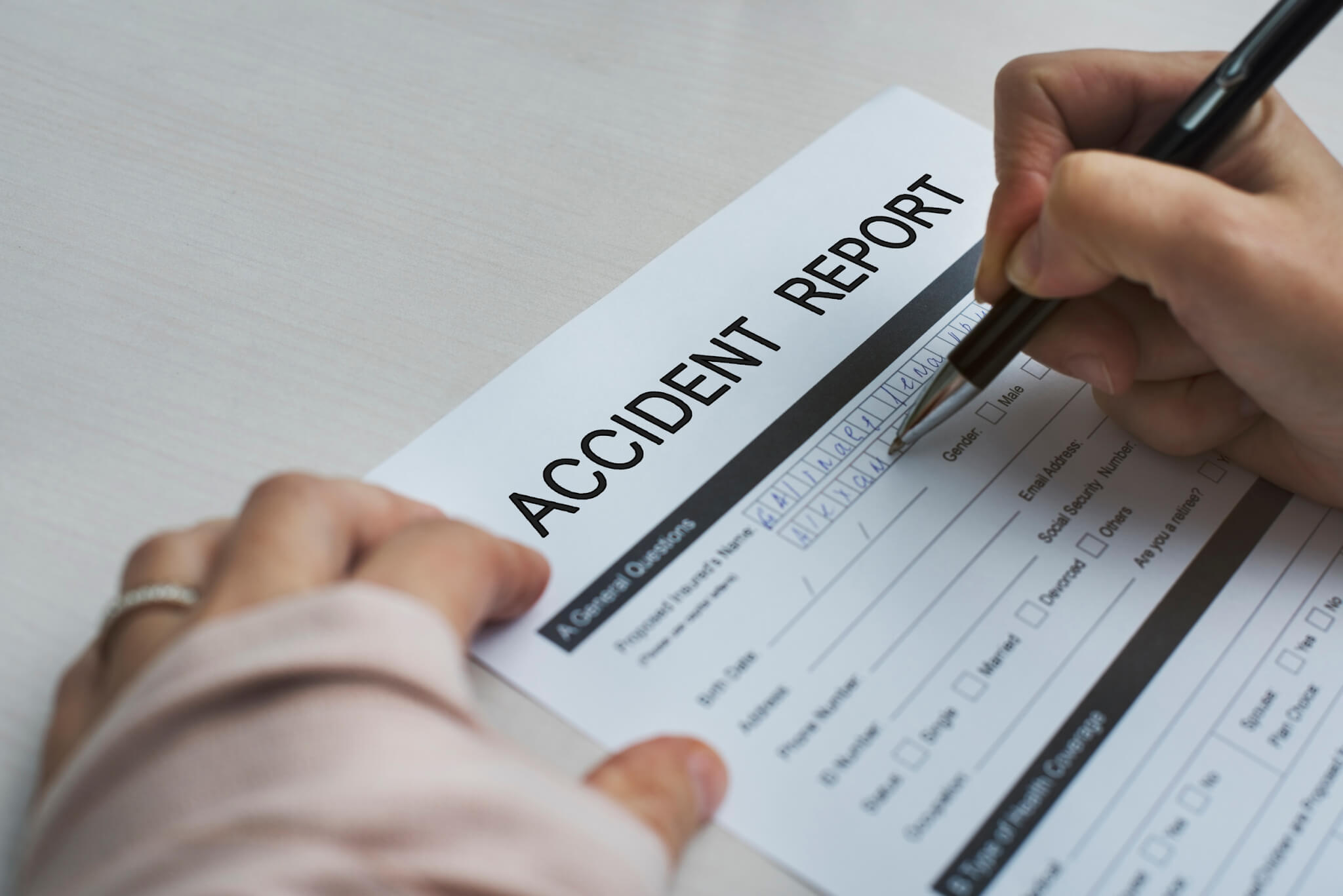
An accident book entry, incident report or police record may show that the accident was reported and what was recorded about it at the time.
These documents can provide useful support for your account, particularly where they were completed soon after the incident. However, they do not automatically prove that every recorded detail is correct. An accident book entry may, for example, simply record the account given by the injured person.
If your accident happened at work or in a public place, reporting it formally is one of the most useful things you can do. Employers with more than ten employees must keep an accident book. If you get injured at work, report the accident promptly and ask for it to be entered on the accident record book. If possible, ask for a copy of the entry or at least make a note of what was recorded.
The police do not attend the scene of every collision, but where they do, for example where someone has been seriously hurt or there is a suspicion of driving whilst under the influence of alcohol or drugs, their report can be a vital document when trying to determine fault.
What can medical records prove?
Medical records perform a different role from evidence showing how the accident happened.
They may help establish:
- when you sought medical attention
- what symptoms and injuries you reported
- what account of the accident you gave
- whether your account remained broadly consistent
- whether the reported injuries are consistent with the accident
Medical records do not normally prove who was responsible for the accident. That question will usually depend on evidence about the incident itself, such as photographs, CCTV, witness accounts and relevant records.
You should seek medical attention because you need it, rather than simply to create evidence for a claim. However, an unexplained delay in reporting symptoms may make it more difficult to establish that they were caused by the accident.
What evidence may be held by the other side?
Some of the most useful evidence may not be in your possession. It may be held by the person, business or organisation responsible for the place, vehicle or equipment involved.
Depending on the circumstances, relevant evidence might include:
- workplace risk assessments and training records
- inspection, maintenance and repair documents
- cleaning schedules
- internal accident investigations
- earlier complaints about the same hazard
- vehicle tracking, telematics or tachograph data
- photographs taken by an employer or insurer
- road inspection and repair records
- emails, messages and call records
- CCTV, body-worn or other recorded footage
A claimant cannot always obtain these records personally. A solicitor may be able to request that relevant evidence is preserved and later seek its disclosure as part of the claim.
When should you gather evidence?
Evidence can disappear surprisingly quickly. A spillage may be cleaned up, damaged equipment repaired and vehicles moved. CCTV footage may be overwritten, while witnesses can become harder to trace and memories less reliable as time passes.
It is understandable to wait and see how serious an injury proves to be before considering a personal injury claim. However, gathering and preserving evidence does not commit you to making a claim. It simply ensures that relevant information is available if you later decide to seek legal advice.
Where possible:
- Write down your recollection of the accident while it is fresh.
- Keep the original photographs and video files.
- Report the accident and retain a copy or reference number.
- Save witness contact details.
- Identify any nearby CCTV or other cameras.
- Ask for relevant recordings to be preserved promptly.
- Keep correspondence from the other party or its insurer.
- Retain damaged items, clothing or equipment where appropriate.
Do not put yourself or anyone else at risk in an attempt to collect evidence. Medical attention and immediate safety must always come first.
Can you claim if you collected no evidence at the scene?
Possibly. A personal injury claim does not necessarily fail because you did not take photographs, obtain witness details or make an accident report at the time.
Your own account is evidence. It may also be supported by medical records, later photographs, messages sent shortly after the accident, records held by the other party or evidence obtained from third parties.
Every case depends on its particular facts. Where there is little direct evidence, consistency and credibility become especially important. A solicitor can consider what information may still be available and whether there are reasonable prospects of establishing liability.
What happens when the other party disagrees with you?
It is common for the people involved in an accident to remember events differently. The other party may deny responsibility entirely or give an account that conflicts with yours.
In many cases, the response will come from the other side’s insurer. It may deny liability because it has received a different account or considers that the available evidence does not establish fault.
A denial of liability does not automatically bring the claim to an end. The accounts of those involved must be tested against the other available evidence, which may include photographs, CCTV, witness statements, accident records and technical information.
What if the other side says you were partly responsible?
The insurer may accept that the other party was partly at fault but argue that your own actions contributed to the accident or the extent of your injuries. This is known as contributory negligence.
It does not necessarily prevent you from recovering compensation. However, any compensation may be reduced to reflect your share of responsibility.
An allegation of contributory negligence should not simply be accepted without considering the evidence. The circumstances of the accident and the actions of everyone involved must be examined carefully.
How can a solicitor investigate disputed liability?
Where liability is disputed, our solicitors may:
- request that CCTV or other footage is preserved;
- obtain accident and incident records;
- contact witnesses and take formal statements;
- seek relevant documents from the other party;
- obtain police or official records where available; and
- instruct an appropriate expert in cases involving technical or specialist issues.
For example, an accident reconstruction expert may be required in a serious road traffic collision where the speed, movement or position of the vehicles is disputed.
You can read more about this in our article, ‘What is the Role of Expert Evidence in Serious Injury Claims?’
How can Mooneerams help?
The strength of a personal injury claim often comes down to evidence that was collated in the first days and weeks after an accident.
However, if you don’t have much or even any evidence to hand at the outset, don’t worry. At Mooneerams, a large part of what our solicitors do for clients is gathering evidence to support their case. We request the CCTV, contact the witnesses, gather the records, and build the picture of what happened.
We can then give you a straightforward assessment of whether there are reasonable prospects of proving liability and with it, success, if you decide to bring a claim.
If the other side is disputing what happened, or you are concerned that important evidence may be lost, contact Mooneerams to discuss the circumstances of your accident.

Posted in Accident Claims, Personal Injury Claims