


If you’re a car or other four-wheeled vehicle driver and are unsure about how much space you should leave between you and cyclists when overtaking, you’re not alone.
Worryingly, road safety charity IAM RoadSmart recently reported that the number of cyclists submitting evidence of motorists overtaking too closely has hit record numbers. The report claims that over half of all motorists (58%, to be precise) are completely unaware of the recommended distance they should leave when overtaking cyclists on the road.
What are the dangers of passing a cyclist too closely?
Overtaking cyclists too closely can have catastrophic consequences, often resulting in harm to the cyclist. Government statistics show there were 4,152 reported cyclist casualties per billion miles travelled in 2023, compared with 290 car occupant casualties and 93 involving those travelling in an HGV.
Some of the reasons why close passes by motorists are so dangerous to cyclists include:
- The cyclist might instinctively swerve and lose control of their bike. In worst-case scenarios, this might cause them to collide with the passing vehicle, another road user, or objects, such as lampposts.
- If the pass is especially close, the vehicle may strike the cyclist and knock them off their bike.
Since cyclists are protected only by a helmet, the ramifications of accidents caused by close passes can be severe. If they’re lucky, the cyclist might escape with just a few cuts and bruises. Sometimes, though, overtaking a cyclist too closely can have catastrophic consequences. Some of the worst cycling accident injuries include, head injuries, amputations, and even death in a fatal cycling accident case.
Close passes don’t just result in physical injuries, either. Cyclists can be left feeling traumatised by near misses.
In an article on the Road Safety GB website A Police Officer describes the scenario where a vehicles passes too close to a cyclist as ‘one of the most frightening things you can experience whilst riding’.
Psychological injuries can linger long after the incident, often longer than any personal injury does. The psychological effects of accidents or close shaves often deter the cyclist from getting back on their bike for a long time. In some cases, bike riders never get back on their bicycle.
What does the Highway Code say?
In 2022, the Highway Code was updated with the aim of introducing rules that offer more protection to the most vulnerable road users, a category which includes cyclists. The new rules introduced a ‘hierarchy of road users’, with those at most risk of being injured in an accident, such as pedestrians, cyclists, and horse riders, at the top.
The idea of the hierarchy is that drivers of vehicles with the potential to cause the most harm should bear greater responsibility for mitigating the danger they pose to others. Crucially, this does not diminish the duty of all road users to act responsibly.
Despite most respondents to the Government’s consultation on the proposed changes being in favour of them, the overhaul sparked controversy among other members of the public. Drivers of motor vehicles were vocal in expressing dissatisfaction over how ‘pro-cyclist’ the new rules were and the perceived unfairness in the ways different groups of road users were treated.
The provisions governing overtaking cyclists are found in Rule 163 of the Highway Code, which states that motorists should, as a guide:
“leave at least 1.5 metres when overtaking cyclists at speeds of up to 30mph, and give them more space when overtaking at higher speeds.”
A study by the Universities of Bath and Brunel found that motorists leave an average gap of 118 cm when passing cyclists, with a small percentage (1-2%) leaving just 50 cm.
Although this study was conducted before the Highway Code was updated, many cyclists have reported noticing no apparent changes in drivers’ behaviour in the years since the update. This appears to be supported by the results of the IAM RoadSmart report, referred to at the beginning of this article.
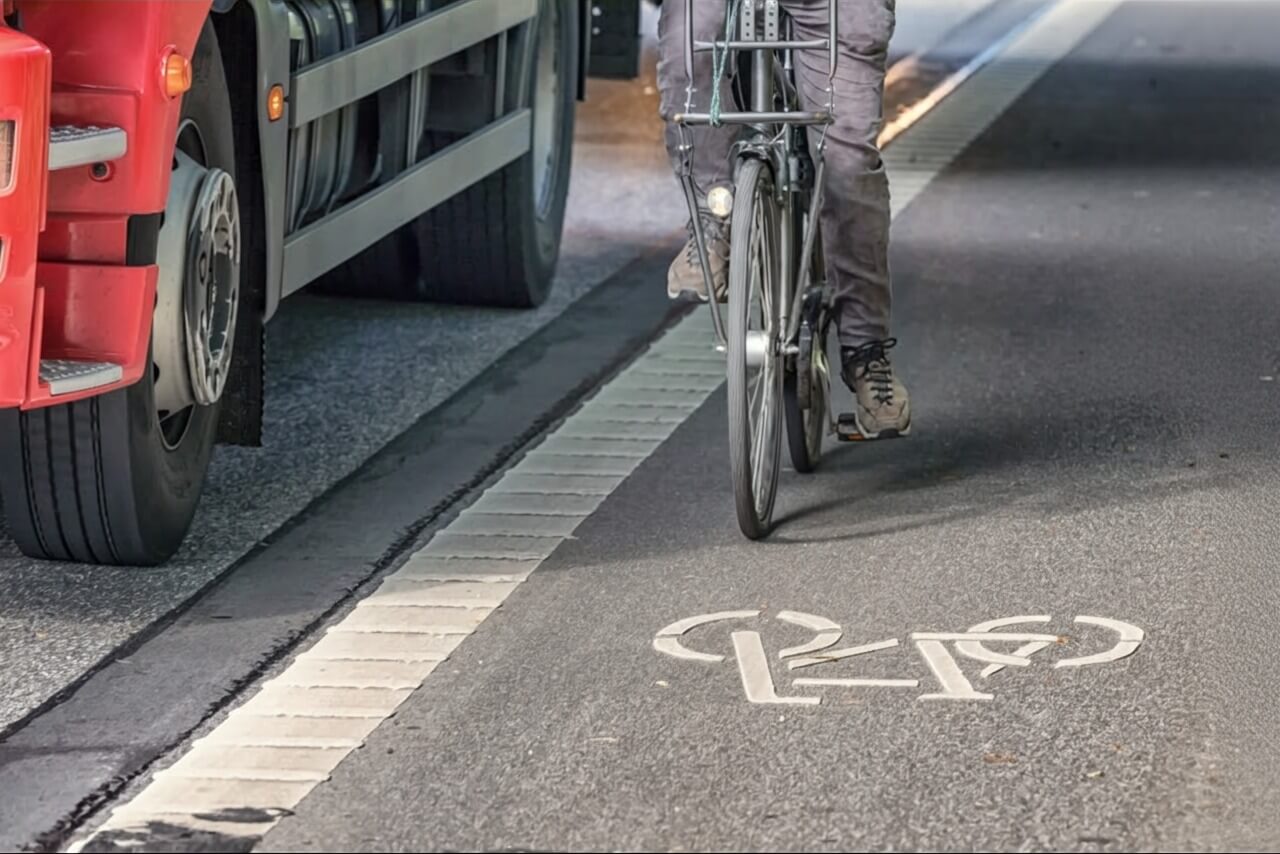
Alarmingly, drivers of long vehicles, such as trucks, which have the potential to do the greatest damage in an accident, tend to get closer to cyclists when overtaking than car drivers do. According to cycling charity Cycling UK, ‘large vehicles passing too close to the cyclist’ is a contributory factor in as many as 25% of collisions.
Why don’t road users follow the Highway Code?
It’s impossible to say why any individual road user doesn’t follow the Highway Code (although in an AA survey referred to below, 4% of those surveyed said they had ‘no intention’ of reading the new rules).
What is manifestly clear, though, is that many drivers are unaware of the Highway Code’s advice that they leave a gap of at least 1.5 metres when overtaking a cyclist.
An AA survey of over 13,700 drivers indicated that 33% weren’t aware of the changes to the Code, while drivers surveyed by IAM RoadSmart admitted to not knowing the last time they’d looked at it.
In 2023, the Government relaunched its ‘THINK!’ campaign to raise public awareness of the new rules and encourage road users of all types to gain a better understanding of how each other sees and uses the roads.
What happens if you don’t follow the Highway Code?
Unlike some Highway Code rules, rule 163 does not impose a legal requirement on a road user; it’s merely advisory. This is indicated by the use of the word ‘should’ as opposed to ‘must’.
Where a Highway Code rule is mandatory, disobeying it constitutes a criminal offence for which you can be fined, banned from driving, or even sent to prison. In contrast, you can’t be prosecuted for flouting a rule that is only advisory.
Having said that, if you were injured in a cycling accident because a vehicle overtook you too closely, you would be able to use the driver’s failure to follow the rules as evidence in support of a cycling accident compensation claim, should you decide to pursue a claim for personal injury compensation.
‘Cycling – The best way to get around’
Coincidentally, the IAM RoadSmart’s report coincided with this year’s ‘Bike Week’, an annual event to promote cycling and encourage more people to ‘get on their bikes’. This year’s theme was ‘Cycling – The best way to get around’ and highlighted the benefits of using your bike for everyday travel, such as nipping to the shops and commuting to work.
Cyclist Commuting reduces the risk of cardiovascular disease, cancer, mental health issues, and ‘death from any cause’ when compared with non-active commutes.
However, many of us are still hesitant to incorporate cycling into our daily lives. The main reason cited by 7 out of 10 people who never ride a bike is safety concerns, with 61% stating that if the roads were safer, they would feel more encouraged to cycle.
To Sum Up
Therein seems to be where the real problem lies. Many of our roads simply aren’t cycling friendly enough (or at all).
Cities with high cycling rates tend to be safer for all road users, including motorists.
On the one hand, you could say that a key takeaway from all the research we’ve covered in this article is that, if people would only educate themselves on the provisions of the new Highway Code, more people would feel more confident in swapping their car for a bike.
The problem is that the surveys and polls referred to elsewhere in this blog, indicate that for many people the Highway Code is something they haven’t read for years if at all, and have no interest in reading, let alone obeying its rules (most of which carry little in the way of deterrent for non compliance).
If the Highway Code is to gain more attention and have a tangible impact on reducing the number of road traffic accident claims, then surely many more of its rules need to be mandatory or ‘must’ rules. If motorists then choose not to take any notice of the rules, the first time they may come to learn of them is when they get prosecuted for breaking a rule.
The more ‘organic’ means of reducing the number of cycling accidents involving motor vehicles is surely by building the correct type of cycling-friendly infrastructure, so that cyclists and motorists meet far less often on the roads of our towns and cities than is currently the case, with some notable exceptions like Bristol, the first city in the UK to be designated as a “Cycling City” and Southampton.

Posted in News, Personal Injury Claims