
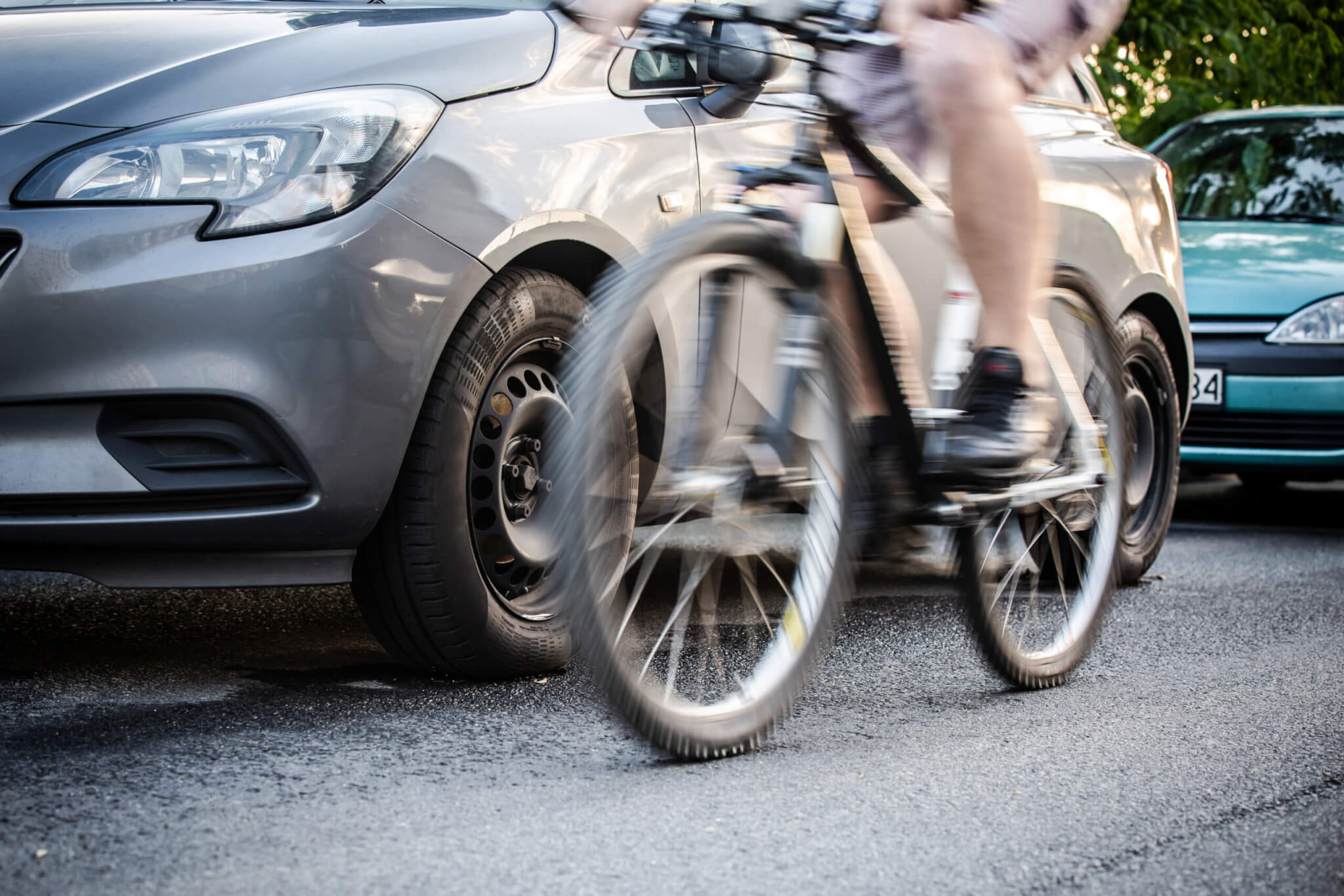
Yes. If a driver’s carelessness forced you to brake or swerve and you came off your bike as a result, you can claim against them even though their car never touched you. The law in England and Wales doesn’t ask whether there was contact. It asks whether the driver caused your injury.
Many riders are unaware of this. A driver pulls out of a side road without looking. You grab the brakes. While braking, the front wheel goes from under you, and you end up on the tarmac with a broken collarbone while the car disappears round the corner without a mark on it. Because nothing hit you, you assume nothing can be done, and a perfectly valid claim never gets looked at.
Can I claim if the car never touched me?
You can, provided you can show two things: that the driver was at fault, and that you were hurt because you had to avoid them.
Every driver owes a duty to take reasonable care around other road users, and there doesn’t have to be a collision for them to be at fault. Solicitors call this a no-contact or non-contact cycling accident claim.
The principle goes back to 1816. In Jones v Boyce, a passenger broke his leg jumping from a stagecoach after a rein snapped, and won his case even though the coach never overturned. You’re judged by what was reasonable in the moment, not by what looks best with hindsight. A cyclist who grabs the brakes and goes over the handlebars when a van pulls out has been injured by the van driver just as surely as one who hit the van.
The same applies whether the driver passed too close, pulled out of a side road, turned across your path, crossed the centre line on a bend or opened a car door in front of you. These are among the most common causes of cycling accidents.
There are limits. Your reaction has to have been a reasonable response to a real danger the driver created. If they gave you plenty of room and you simply misjudged a bend, you can’t claim.
If you were partly to blame, you don’t lose the right to claim: your compensation is reduced by a percentage. Not wearing a helmet only matters if it would have made a difference to your injury.
How do I prove the driver was at fault if there was no collision?
Proving fault against a driver whose vehicle didn’t hit you can be challenging but is possible.
There’s no dent or paint transfer to show the driver was involved. Their insurer will usually say their driver wasn’t there, did nothing wrong, overreacted, or fell for another reason, such as your speed or the road surface.
What provides the answers to those arguments, whether or not the driver stopped, is evidence gathered in the first few days after the accident, so:
- Get checked over by your GP or A&E, even if you feel shaken rather than hurt. Symptoms of concussion can take days to appear, and so can ligament damage. Whichever department of the NHS you used for treatment, GP or A&E, a record is made of your attendance and what was diagnosed. Your medical records also show when and how it happened. We discuss claims involving delayed injuries in more detail, in our blog: Can I claim for serious injury that wasn’t obvious at first?
- Report it to the police, online or on 101, with the time, the place, and anything you remember about the vehicle, like the colour, make, a partial plate, or a company name. Ask for a reference number and keep it safe.
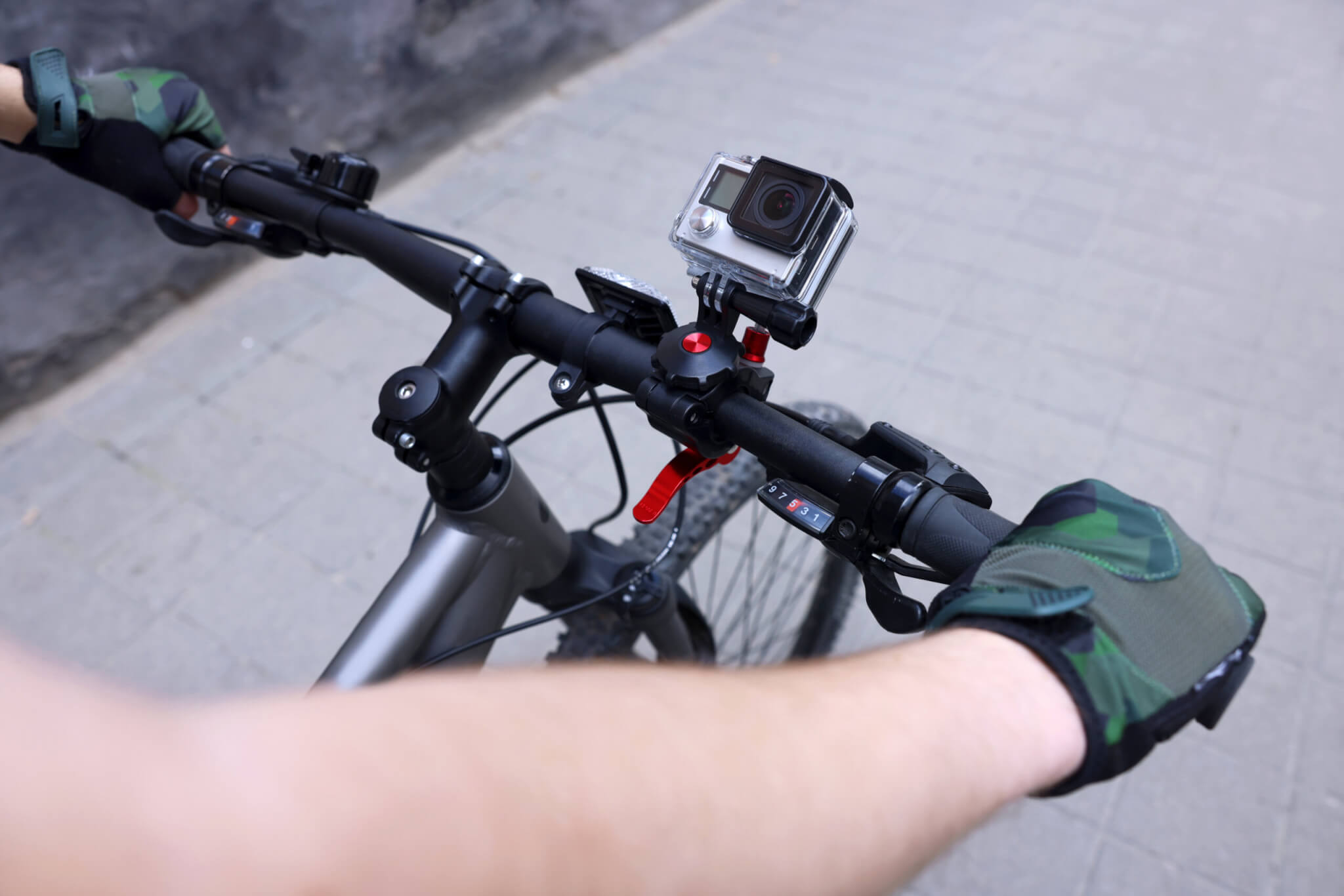
- Secure any camera footage. If you ride with a bike or helmet camera, copy the original file somewhere safe and don’t edit it. Then ask about other cameras straight away, like a dashcam in the car behind, on a bus, at a shop, or a video doorbell. Many systems record over themselves within days or weeks, so you or your chosen personal injury solicitors need to move quickly.
- Take witness details. A name and number for someone who saw what happened can decide a claim like this.
- Photograph the scene and your injuries. The junction or stretch of road where you came off, any kerb or pothole you hit, and your cuts and bruises (before they fade).
- Write down what happened while it’s fresh: where the vehicle came from, what it did and what you did.
- Save your ride data. A Strava or Garmin file shows your speed and the moment you braked.
- Keep the bike, helmet and clothing as they are. Photograph them, and don’t repair anything yet.
If nobody saw it and there’s no footage, a claim can still succeed on your own account, provided it holds together. What you told the ambulance crew, A&E and the police, the damage to the bike and your ride data all need to tell the same true story.
You don’t need to gather all the evidence on the list above, and you don’t have to collect it yourself. Chasing camera footage before it’s wiped is something your solicitors will do for you.
If you aren’t sure whether you have enough evidence yet to prove your case, that’s what your first informal conversation with one of the personal injury lawyers at Mooneerams is for: call 029 2199 1927 or request a callback.
What if the driver didn’t stop?
In a lot of no-contact accidents, the driver simply carries on. Cyclists usually want to know whether that was an offence, and whether it leaves them with nobody to claim against.
Do they have to stop?
Yes, if they realised an accident had happened. The duty to stop doesn’t depend on contact.
Section 170 of the Road Traffic Act 1988 applies where someone is injured in an accident that happens ‘owing to the presence of’ a car, van, lorry or motorbike on a road’. Those are the key words. A driver whose bad overtaking causes a cyclist to fall from their bike has the same duty to stop and give their details as one who hit the cyclist.
Often the driver has no idea anything happened, and the police take it no further. That has no bearing on your claim. The police must prove an offence beyond reasonable doubt. You only have to show that your account is more likely than not to be right.
What if they the motorist is never found?
You can still claim.
If you have the registration number, the vehicle’s insurer can usually be identified and the claim is made against them in the normal way, for injuries and for your damaged bike and kit.
If the vehicle can’t be traced, the claim goes to the Motor Insurers’ Bureau (MIB), which insurers fund to compensate people injured by uninsured and untraced drivers. This is what people usually mean by a ‘hit and run’ claim, although nothing in the scheme requires a hit. The MIB may expect you to have reported the matter to the police, which is another reason to report promptly. Our uninsured and untraced driver claims page explains the process.
Will the MIB pay for my bike?
Only if it has also paid you for a ‘significant’ injury. Broadly, that means two or more nights in hospital or three or more hospital out-patient appointments. Even then there’s a £400 excess, so the first £400 of the loss isn’t paid. ‘Property’ here covers your helmet and clothing as well as the bike.
This can produce some bizarre results. For instance, you may write off a £2,000 bike in an untraced close pass, escape with bad bruising, and recover nothing for the bike.
Is a close pass illegal?
Not in itself. There’s no offence of ‘close passing’, but a close pass can amount to careless or dangerous driving, and in a compensation claim it’s strong evidence that the driver wasn’t taking reasonable care.
Rule 163 of the Highway Code tells drivers to leave at least 1.5 metres when overtaking a cyclist at up to 30mph, more at higher speeds, and to wait behind if they can’t. It’s guidance rather than law, but a breach can be relied on in a civil claim. A driver who passed within a foot of you at 40mph will struggle to persuade anyone they were taking reasonable care.
The police don’t always act on close-pass footage. In Wales, GoSafe paused action in 2025 on submissions of footage showing a close pass and nothing more, saying its staff couldn’t judge distance from video alone.
It has since told Cycling UK that riders should keep submitting footage with a written statement of what happened, and that it’s far more likely to be able to act where the footage shows you were forced to change speed or direction. Whatever the police decide, it doesn’t affect a compensation claim, and the footage can still be very good evidence for you.
What if I hit a kerb, a pothole, a parked car, or a pedestrian?
It doesn’t shift the blame onto you. If a driver forced you to swerve, whatever you hit next is part of the same accident, as long as swerving was a reasonable reaction.
If you hit a kerb or a parked car, it’s treated like any other fall. The question is still why you had to swerve, not what you subsequently hit.
A pothole. You may have a second claim against the council or whoever else is responsible for the road, if the defect was dangerous and should have been found and repaired. The council or other road owner has a defence to the claim if they can show a reasonable system of inspection and repair was in place, so photograph the pothole with something next to it for scale. Our article on pothole accident claims explains how those work.
A pedestrian or another rider. They may be able to claim against the driver, because the driver was to blame for the accident. If they blame you instead, check whether you have third-party cover through your home insurance or a cycling club membership, and keep your evidence, because what shows the driver caused your injuries shows the driver caused theirs.
Is my injury serious enough to claim for?
Probably, and you don’t need to have broken a bone.
For a cyclist, a claim is normally worth bringing with a solicitor once the injury itself is valued at £1,000 or more. As a rough guide, that covers most injuries that take longer than a month or so to clear up. That clearly includes fractures, but it can also cover damaged ligaments, a badly sprained wrist or shoulder, deep cuts, road rash that leaves a scar, broken teeth and concussion.
If you aren’t sure where your injury is likely to fall, ask us.
What can I claim for?
In addition to compensation for the injury itself, you can claim for lost earnings, treatment, and travel costs, possibly for help you needed from family while you recovered, and the cost of your bike, helmet, and kit. If the driver is never traced, the MIB limits on property, as explained above, apply.
If the injury has left you nervous about riding, that forms part of the claim, as does a formal diagnosis of a psychological injury like PTSD, severe anxiety or panic disorders.
What will it cost me?
We usually handle cycling accident claims on a No Win No Fee basis.
How long do I have to claim?
In law, you usually have three years from the date of the accident to start a court claim. In practice, you should act far quicker, because the footage and witnesses that win a no-contact claim usually disappear within weeks.
For a child, the three years run from their 18th birthday. Different rules apply to someone who lacks the mental capacity to manage a claim, for instance after a serious head injury. The same time limits apply to MIB claims. Our article on five things cyclists should know before making a claim covers time limits in more detail.
Talk it through with us
If you came off your bike avoiding a driver and aren’t sure whether you have a claim, call 029 2199 1927 or request a callback. You’ll speak to one of the Mooneerams team. Our initial conversation doesn’t commit you to anything.
It’s your chance to tell us what happened, how you’re hurt and what evidence you have so far, and we’ll tell you honestly whether we think you have a claim with a reasonable prospect of success. If you decide you want us to act for you, we’ll start by asking for any camera footage before it’s overwritten.
Mooneerams acts only for injured people, never for insurers. We’re based in Cardiff and act for cyclists across England and Wales, including in claims where the driver was never traced.

Posted in Personal Injury Claims, Road Traffic Accidents