
Cycling has plenty going for it. It’s relatively inexpensive, good exercise, environmentally friendly and, if your journey involves battling through rush-hour traffic, often quicker than driving.
There is, however, an obvious downside. Cyclists are amongst the most vulnerable people using our roads.
A driver involved in a collision has seatbelts, airbags, crumple zones and the body of the vehicle itself to offer protection. A cyclist has none of those things.
That’s why an accident that leaves a car with little more than a dent can leave a cyclist with serious, sometimes life-changing, injuries.
According to the latest Department for Transport figures, 79 cyclists were killed on Great Britain’s roads in 2025, 4,311 were seriously injured and a further 11,652 suffered slight injuries.
Averaged across the five years from 2021 to 2025, two cyclists were killed and 77 seriously injured every week in reported road accidents.
And even those figures may not tell the full story, because non-fatal cycling accidents are amongst those most likely to go unreported.
So, why do cycling accidents happen, and what should you do if you’re unlucky enough to be involved in one?
Let’s take a look.
What are some of the most common causes of cycling accidents?
There isn’t one single cause.
Some accidents are caused by motorists. Others result from poor road conditions. In some cases, both the cyclist and another road user may have contributed, and sometimes the cyclist is wholly at fault.
However, the statistics point to a number of recurring themes.
1. Drivers failing to see cyclists
One of the biggest issues is simply that one road user hasn’t seen another.
The Department for Transport refers to this as “ineffective observation” by the driver, rider or pedestrian involved.
In fatal or serious collisions involving cyclists and other vehicles during 2024 and 2025, ineffective observation was recorded as a road safety factor for 63% of the non-cycle vehicles involved.
It was also recorded in relation to 45% of cyclists, so this clearly isn’t an issue that only affects drivers.
Even so, there is an obvious imbalance in the likely consequences. If a driver fails to see a cyclist, the cyclist is usually the one who comes off worse.
Typical examples include a driver pulling out of a side road, changing lane without checking properly, turning across a cyclist’s path or opening a car door into the path of an approaching bike.
“I didn’t see them” may explain how an accident happened. It doesn’t necessarily excuse it.
Drivers still have a responsibility to take reasonable care and keep a proper lookout for vulnerable road users.
2. Accidents at junctions
If you cycle regularly, this one probably won’t come as a surprise.
Junctions are a particular danger point.
The latest DfT figures show that 53% of cyclists who were seriously injured between 2021 and 2025 were injured at, or within 20 metres of, a junction.
There are plenty of possible reasons.
- A driver may fail to see a cyclist approaching.
- They may see them but misjudge their speed.
- A vehicle may turn across the cyclist’s path.
- Stationary traffic may obscure everyone’s view.
The Highway Code says drivers should not cut across cyclists travelling straight ahead when turning, changing direction, or moving into a different lane. That does not, however, mean cyclists can simply assume everyone else has seen them.
Being legally in the right is little consolation after a serious accident.
3. Drivers misjudging a cyclist’s speed
Cyclists are often moving faster than motorists expect. That’s especially true of experienced road cyclists and e-bike riders, but even an ordinary commuter can cover the distance between themselves and a junction surprisingly quickly.
A driver sees a cyclist.
They think, “I’ve got time to pull out.”
They haven’t.
What looked like a comfortable gap disappears and suddenly the cyclist has nowhere to go.
It’s a split-second mistake that can have consequences lasting months, years or even a lifetime.
4. Vehicles passing too closely
Most regular cyclists will know the feeling. A vehicle approaches from behind and passes far too close for comfort.
Sometimes it is frightening but nothing more. Sometimes it causes an accident.
The DfT found that passing too close was recorded as a factor for 14% of non-cycle vehicles involved in fatal or serious cycling collisions where a road safety factor was recorded.
A close pass doesn’t have to involve direct contact. A cyclist may instinctively swerve away, clip the kerb, hit a pothole or simply lose control.
The Highway Code advises drivers overtaking cyclists at speeds of up to 30mph to leave at least 1.5 metres.
If there isn’t enough room to pass safely, wait. It really is that simple.
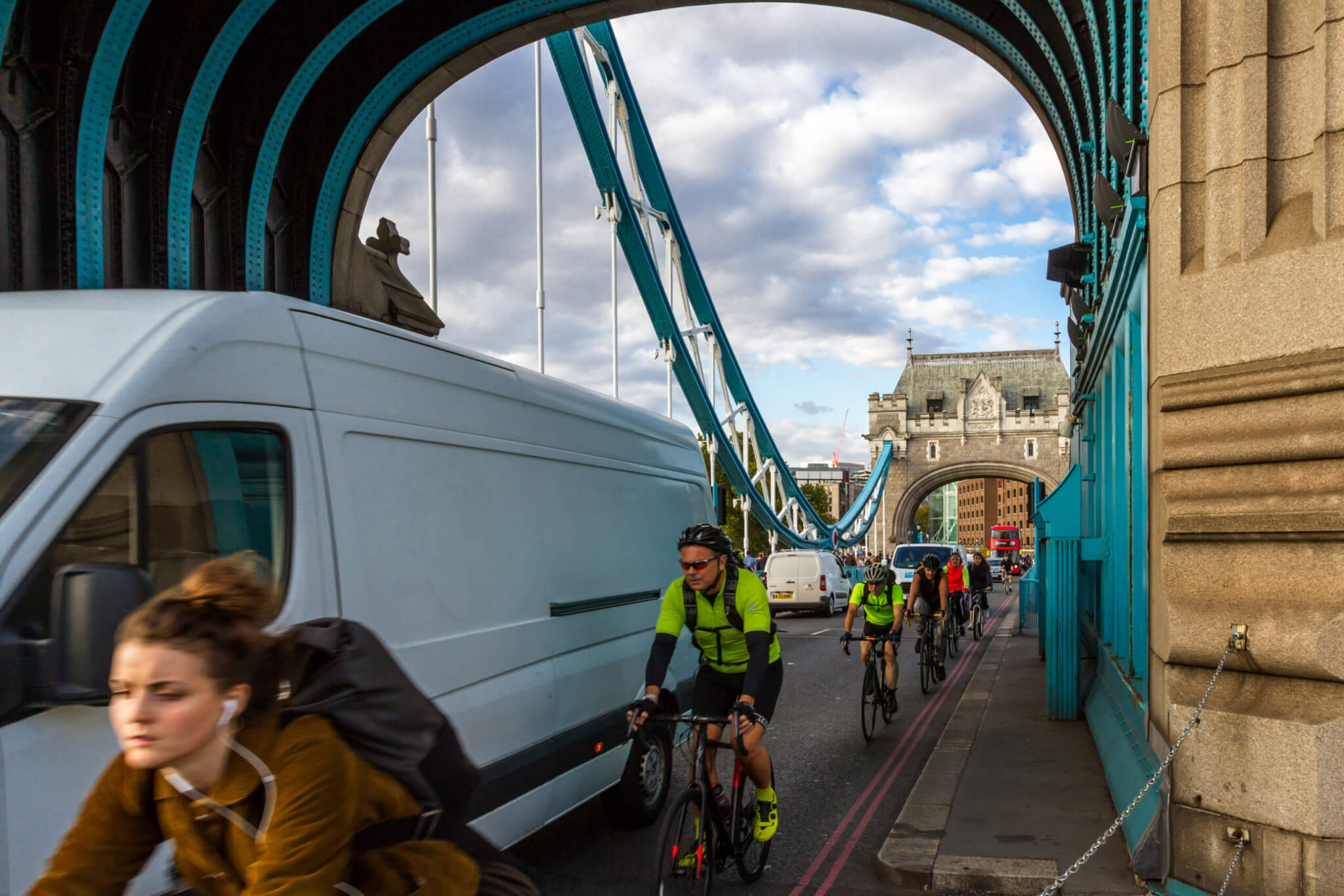
5. Cars, vans and lorries turning across cyclists
Another dangerous scenario occurs when a vehicle turns across a cyclist’s path.
A classic example is the so-called “left hook”, where a vehicle overtakes or travels alongside a cyclist before turning left across them.
Large vehicles pose a particular danger.
RoSPA has previously highlighted the disproportionate risk HGVs present to cyclists. Its analysis found that lorries accounted for only around 6% of traffic but were involved in 14% of cyclist deaths over the period it examined.
The latest DfT figures tell a similar story: among reported cyclist casualties in two-vehicle collisions involving HGVs between 2021 and 2025, 4.8% were fatal.
The reason isn’t difficult to understand.
An HGV is enormous compared with a bike, and it also has significant blind spots. Cyclists should be extremely cautious when travelling alongside large vehicles, particularly near junctions. Equally, HGV drivers have a responsibility to check carefully before manoeuvring.
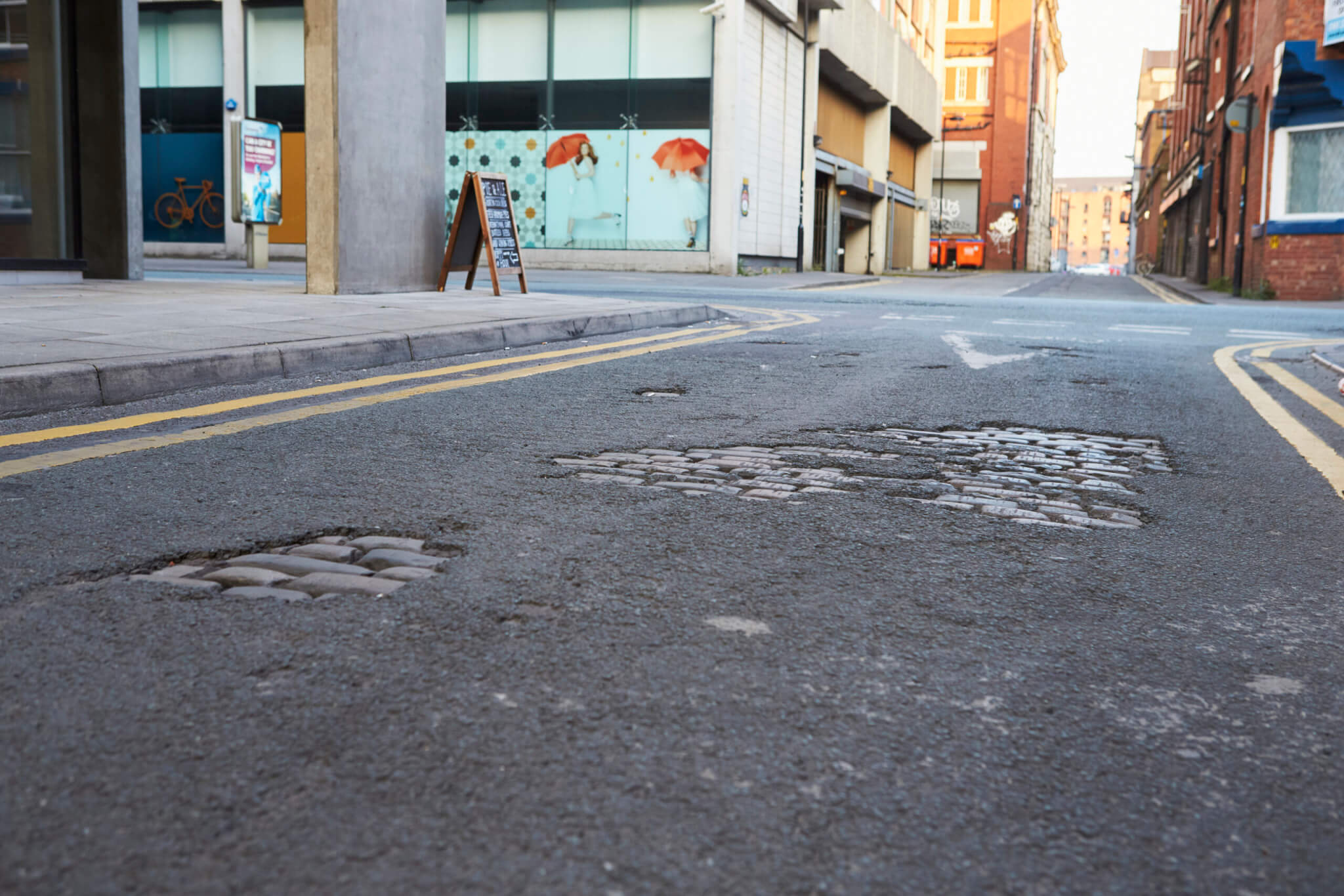
6. Potholes and poorly maintained roads
Not every cycling accident involves another vehicle.
A pothole that causes little more than an uncomfortable bump for a motorist can throw a cyclist straight over their handlebars.
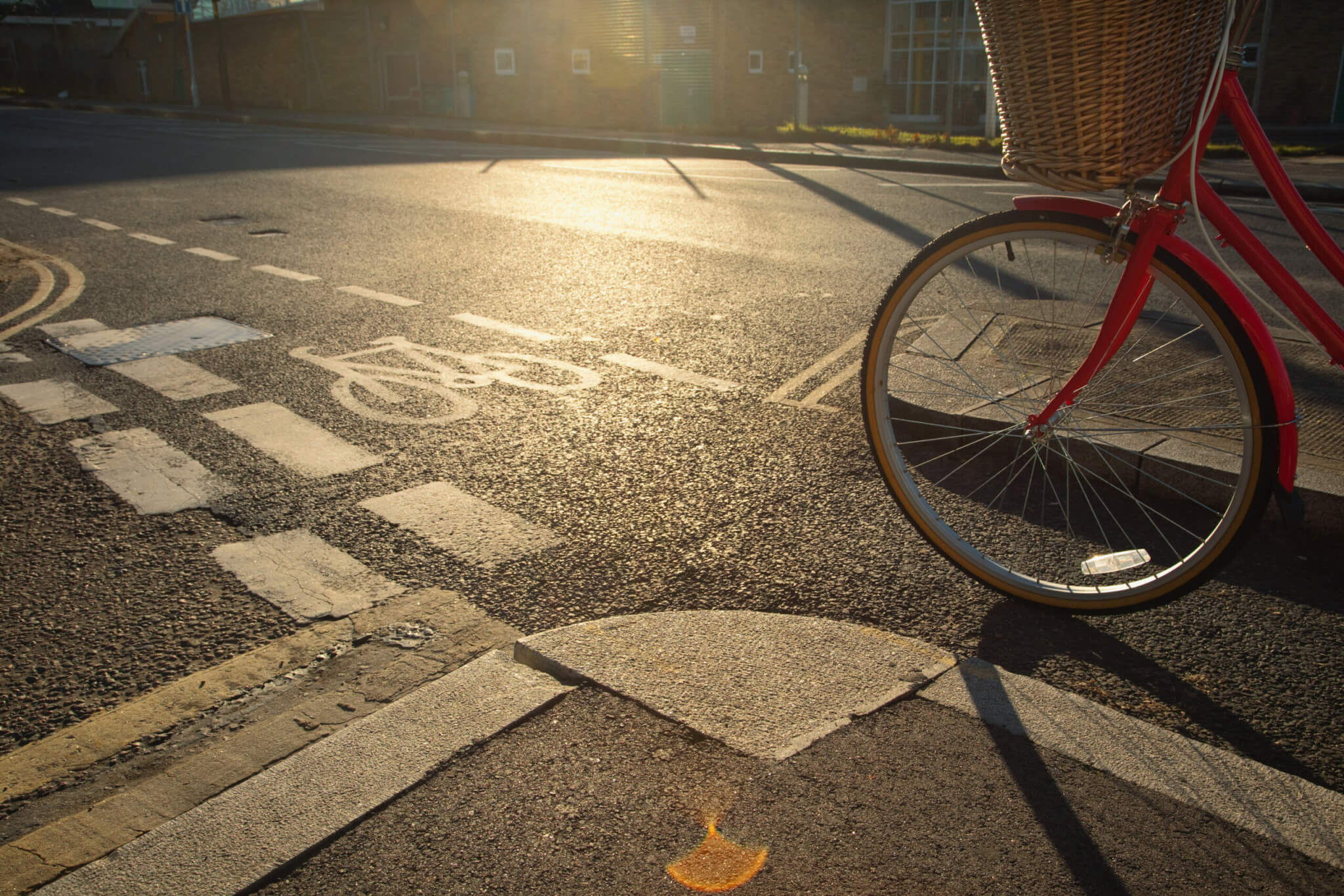
Other hazards include uneven road surfaces, defective drain covers, loose gravel, debris and poorly maintained cycle lanes.
If you’re injured because of a dangerous road defect, you may be able to bring a claim against the organisation responsible for maintaining the road.
However, these claims are not always straightforward.
The fact that a pothole or other defect exists does not automatically mean the relevant authority is liable. The question is not simply whether a pothole existed, but whether the authority knew, or could reasonably have been expected to know, about it, and whether it had a proper inspection and maintenance system in place.
This is why photographs taken at the time of the accident can be so important.
Road defects get repaired. Evidence disappears.
If you can safely record what caused the accident, do so.
7. Car doors opening into the path of cyclists
There’s even a name for it. Dooring.
A cyclist is riding alongside parked vehicles when a driver or passenger opens a door directly into their path.
The cyclist may hit the door itself or swerve into moving traffic trying to avoid it. Either outcome can result in serious injury.
The Highway Code Rule 239 states that if the driver of a vehicle has to stop on the roadside, they MUST ensure they do not hit anyone when opening the door. This is a legal requirement that must be complied with.
Separately, it recommends drivers use the Dutch Reach – opening the door with the opposite hand so your body naturally turns towards the road, making it easier to spot an approaching cyclist.
It’s a very simple habit to get into, but it could prevent a very serious accident.
What are common cycling injuries?
Cycling accidents can cause anything from cuts and bruises to catastrophic injuries.
Common injuries include:
- broken bones and fractures
- facial and dental injuries
- cuts and scarring
- knee and joint injuries
- soft-tissue injuries
- back and spinal injuries
- head and brain injuries
- nerve damage
- psychological injuries such as anxiety and PTSD
Head injuries are a particular concern.
Research highlighted by the brain injury charity Headway looked at 11,192 adult cyclists who attended hospital with major cycling-related injuries.
Where helmet data was available, severe traumatic brain injury was recorded in 47.6% of cyclists who were not wearing helmets, compared with 19.1% of helmeted cyclists.
The study also recorded lower 30-day mortality amongst helmeted cyclists.
That doesn’t mean a helmet can prevent every serious injury. It can’t.
But it does underline just how significant brain injuries following cycling accidents can be.
What should I do after a cycling accident?
Hopefully, you’ll never need this section.
If you do, the most important thing is your health. If you’re badly injured, call 999 or ask someone else to do it. If you’re able to do so safely, the following steps may also help.
Get the other person’s details
If another vehicle is involved, try to obtain the drivers:
- name;
- address;
- telephone number;
- vehicle registration; and
- insurance details, if available.
Don’t get drawn into an argument at the roadside. You don’t need to decide liability there and then.
Take photographs
If possible, photograph:
- the accident scene;
- your bike;
- the other vehicle;
- any damage;
- your injuries;
- road markings;
- potholes or defects; and
- the general road layout.
Take more photos than you think you need. You can always delete them later, but you can’t go back and recreate the scene.
Get witness details
Independent witnesses can be extremely useful if there is a disagreement about what happened.
Ask for their name and contact details.
Your solicitor can take a proper statement later.
Look for camera footage
Check for CCTV, dash cams, helmet cameras, buses, shops, and video doorbells.
Footage is often overwritten quite quickly, so identifying it early can make a real difference.
Seek medical attention
Some injuries aren’t immediately obvious.
Adrenaline can mask pain, and symptoms of concussion, brain injury, neck or back injuries can become more noticeable later.
Get appropriate medical advice, even if you initially feel “not too bad”.
What if the cyclist was partly at fault?
You may still be able to claim.
Personal injury cases are not always a simple question of one person being entirely responsible and the other completely blameless. Responsibility can be shared.
For example, a driver might have pulled out when it wasn’t safe, but there may also be evidence that the cyclist was travelling too quickly for the conditions.
In that situation, the cyclist may still recover compensation, but the amount could be reduced to reflect their share of responsibility.
This is known as contributory negligence.
So, don’t automatically assume you can’t claim because you think you may have done something wrong. Get legal advice first.
What if the driver didn’t stop?
A hit-and-run accident doesn’t necessarily mean there is no route to compensation.
Claims involving uninsured or untraced drivers can potentially be made through the Motor Insurers’ Bureau (MIB).
If a vehicle hits you and leaves the scene, report the accident to the police and gather whatever evidence you can.
A partial registration number, vehicle description, witness account or piece of CCTV footage may prove extremely useful.
What happens if I suffer a serious injury?
This is where a cycling accident claim can become much more complex.
Someone who suffers a brain injury, spinal injury, multiple fractures or another life-changing injury may have needs that continue for years.
They may be unable to return to work. They may need rehabilitation, care, specialist equipment or adaptations to their home.
Their family may suddenly find themselves providing substantial amounts of unpaid care.
A serious injury claim may therefore need to include compensation for:
- past and future loss of earnings;
- rehabilitation and treatment;
- care and assistance;
- mobility equipment;
- home adaptations;
- transport needs; and
- future medical expenses.
This is also why serious injury claims shouldn’t be settled too quickly.
Before a claim is concluded, it’s important to understand the injured person’s long-term prognosis and future needs.
Once a case is settled, you generally can’t go back for more because the injury later turns out to be worse than expected.
How long do I have to make a cycling accident claim?
As a general rule, in England and Wales, court proceedings in a personal injury claim must be started within 3 years of the date of the accident.
There are exceptions, including claims involving children and people who lack the mental capacity to conduct proceedings themselves.
Three years can sound like a long time, but it’s surprising how often people leave it until the last minute to claim.
Witnesses move away. CCTV is deleted. Vehicles are repaired. Potholes are filled in.
So, although you shouldn’t feel pressured into making a claim immediately, it’s usually sensible to seek legal advice sooner rather than later.
Should I speak to a specialist cycling accident solicitor?
If you’ve been injured in a cycling accident that you believe was caused by somebody else, it’s worth speaking to a specialist personal injury solicitor.
That doesn’t commit you to making a claim.
It simply allows someone experienced in this area to consider what happened, whether another person may have been legally responsible and whether you have reasonable prospects of receiving compensation.
At Mooneerams Solicitors, we only handle personal injury and medical negligence claims.
We act for injured people, never defendants or insurance companies, and our specialist personal injury solicitors have many years of experience dealing with cycling accidents, road traffic claims and cases involving serious and life-changing injuries.
Most of the personal injury claims we handle are dealt with on a No Win No Fee basis.
If you’ve been injured in a cycling accident and would like to discuss what happened, call us on 029 2199 1927 or complete our online contact form and we’ll call you back.
The initial conversation is free and confidential.

Posted in Road Traffic Accidents