
Autumn has a habit of creeping up on us.
The start of September can still feel like summer. But a few weeks later, the morning commute might involve driving straight into a low sun, the journey home is getting noticeably darker, and the roads are covered with wet leaves.
None of these things is particularly unusual. The problem is that the change can happen quickly enough to catch drivers out.
While we might typically associate winter with having the most difficult driving conditions to contend with, autumn has its own combination of hazards to contend with. Some of them are surprisingly easy to underestimate.
The latest Department for Transport (DfT) figures provide a timely reminder of why road safety campaigns matter. In 2025, there were 127,883 casualties of all severities from reported road collisions in Great Britain. Of those, 29,918 were killed or seriously injured, an increase of 4% compared with 2024.
So, as summer disappears for another year, let’s look at some of the hazards drivers need to be ready for this autumn.
Why can autumn driving be deceptively difficult?
Perhaps one of the biggest problems with autumn driving is that conditions aren’t always obviously dangerous.
Most of us would instinctively take more care if we woke up to several inches of snow or a sheet of ice outside the front door. A bright September morning doesn’t tend to elicit the same response.
Yet a road can very quickly become more challenging to drive on when bright sunshine is low in the sky, the surface is damp, leaves are accumulating, or daylight is disappearing earlier than it did just a few weeks ago.
It’s the combination of those factors, and the speed at which conditions change at this time of year, that can catch people out.
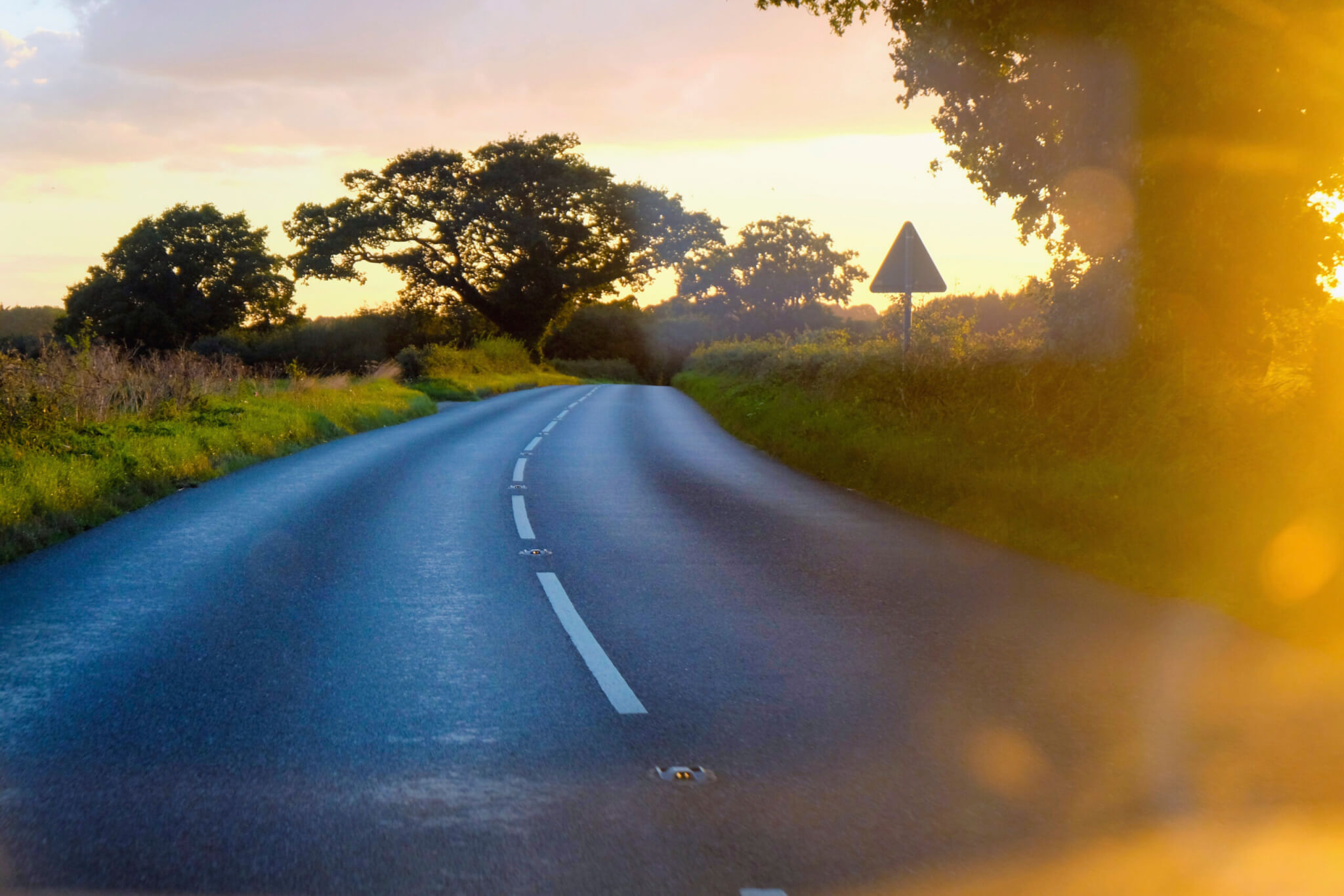
Low autumn sun – a bigger hazard than you might think
Let’s suppose you’re driving along a familiar road on a clear autumn morning. You turn a corner, come over the brow of a hill, and suddenly the sun is directly in your eyes.
For a few seconds, it can be incredibly difficult to see what is in front of you.
Low sun is particularly troublesome during autumn because it often coincides with the morning and evening rush hours. In other words, it can be at its most dazzling just as roads are filling with commuters, pedestrians and children travelling to and from school.
A dirty or smeared windscreen can make the problem considerably worse, scattering the sunlight and reducing visibility even further.
The Highway Code advises drivers who are dazzled by bright sunlight to slow down and, if necessary, stop.
It sounds like common sense. But how many of us have, at some point, found ourselves squinting through the windscreen for those few seconds while waiting for the road ahead to become visible again?
The important point is that if you can’t see clearly, you are unlikely to react promptly to a pedestrian stepping into the road, the cyclist ahead of you, stationary traffic or another unexpected hazard.
The latest DfT figures underline just how important observation is. In 2025, ineffective observation by a driver, rider or pedestrian was the most commonly recorded individual road safety factor and was assigned to half of all fatal and serious collisions where at least one factors was recorded.
When rain and fallen leaves combine
In Britain, it doesn’t just rain in autumn.
However, rain combined with the prevalence of fallen leaves in autumn creates a more distinctive seasonal problem.
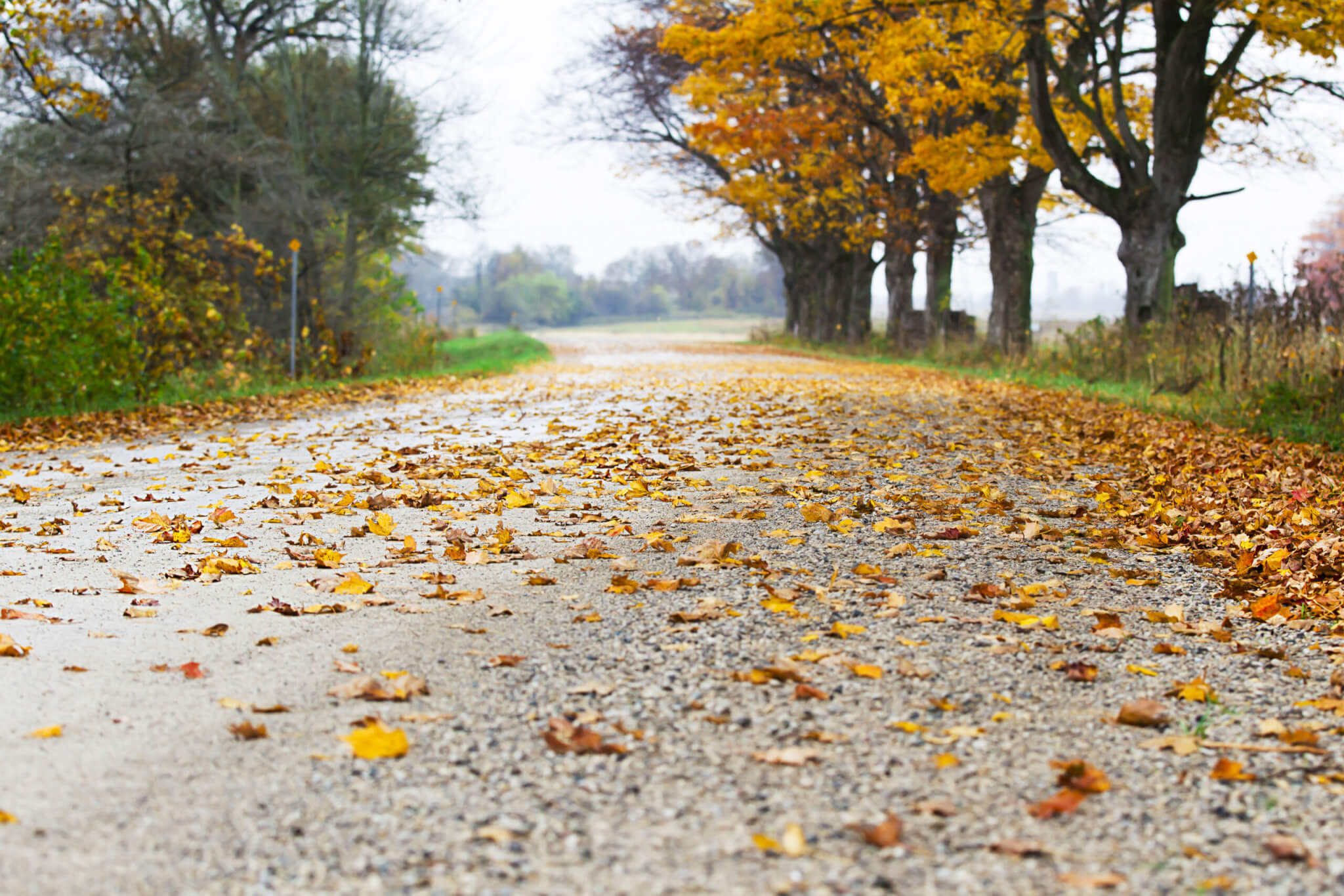
Wet leaves can reduce the amount of grip available to tyres, particularly when braking or going around a corner. A layer of leaves may also cover road markings, potholes and other defects in the road surface.
For cyclists and motorcyclists, a slippery patch of leaves can be especially hazardous because losing grip on two wheels can result in a fall even without a collision with another vehicle.
Then there is the rain itself.
According to the Highway Code, stopping distances are at least doubled on wet roads because tyres have less grip on the surface.
Heavy rain reduces visibility, while standing water brings the possibility of aquaplaning, the phenomena that happens when a vehicle’s tyres lose contact with the road surface and effectively glide across a layer of water.
The Met Office points out that rain is particularly significant when it comes to serious road accidents with nine out of ten weather-related deaths and serious injuries on the roads occurring in rainy conditions.
The lesson from all of this isn’t that we should all stay at home whenever it rains, otherwise nothing would get done in Wales!
No, if there’s a lesson to be learned from the stats highlighted it’s that the way we drive in good conditions may not be the right way to drive when the road surface and visibility change.
The commute that suddenly happens in the dark
One of the strangest things about this time of year is how quickly the evenings seem to disappear.
Even before the clocks go back at the end of October, journeys that were comfortably made in daylight during the summer start taking place at dusk or in complete darkness. As a result, what drivers can see and how quickly they are able to react, changes completely.:
- pedestrians, cyclists and motorcyclists may be harder to spot.
- distances can be more difficult to judge
- glare from headlights can make visibility even more challenging.
And what about tiredness? A journey home after a long day at work can feel very different when it is dark outside, particularly for someone who has already spent several hours driving or working a physically demanding shift.
Drivers need to be particularly alert around junctions and other places where different road users come together.
DfT figures show that around half of all road casualties in 2025 resulted from collisions occurring at, or within 20 metres of, a junction.
The road hasn’t changed because autumn has arrived. What has changed is our ability as drivers, to see what is happening on it.
Why autumn can be particularly challenging on rural roads
Many of the hazards we’ve already discussed can be amplified on rural roads.
Low sun on an open stretch of road can be dazzling. Trees can leave bends covered in wet leaves. Heavy rain can result in standing water, while mud from agricultural vehicles may make sections of road slippery.
Add narrow lanes, blind bends, limited street lighting, cyclists, horse riders and slow-moving agricultural vehicles, and there can be a lot for a driver to deal with.
This is particularly important because rural roads already account for a disproportionate number of road deaths.
In 2025, 60% of road fatalities occurred on rural roads, despite those roads carrying 45% of traffic. Single carriageways accounted for 77% of fatalities, while the greatest number of road deaths occurred on roads with a 60mph speed limit.
That’s not to say that rural roads are inherently unsafe, nor that autumn causes those deaths. They do, however, demonstrate the potential consequences when something goes wrong on roads where vehicles may be travelling at higher speeds.
Autumn simply adds a few more things for drivers to think about.

Does bad weather excuse a driver who causes an accident?
No, it doesn’t.
Rain, low sun or a slippery road may help explain how an accident happened, but poor conditions don’t give drivers an excuse should their careless actions result in a road traffic accident.
All road users are expected to adapt their driving or riding to the conditions they encounter.
For example, if the road is wet, that might mean increasing the distance from the vehicle in front, more than normal.
If visibility is affected by low sun, it means slowing down or even stopping until you can see properly.
On a narrow rural road covered with wet leaves, travelling at a speed that would ordinarily be perfectly reasonable on a dry, clear road, might no longer be safe.
This is an important point when it comes to road traffic accident claims.
Suppose another driver loses control on a wet bend because they were travelling too quickly for the conditions and collides with your vehicle. They can’t necessarily avoid responsibility simply by saying that the road was slippery.
If a driver runs into the back of another vehicle, they will most likely be held liable for the accident, even if the road surface was wet from heavy rain. Ultimately, the Highway Code expects drivers to leave enough space between their vehicle and the one in front to maintain safety. If bad weather dictates, they should take extra care to leave more space (up to double the stopping distance) to account for the wet conditions.
Equally, there could be other contributing factors. A poorly maintained road, potholes, flooding, mud or debris could potentially have played a role in what happened.
That’s why establishing liability after an accident requires looking at all the prevailing circumstances rather than simply blaming the weather.
What if you’re injured in an autumn road accident?
Hopefully, your biggest motoring inconvenience this autumn will be having to scrape wet leaves off the car or discovering that you need your headlights considerably earlier than you did a few weeks ago.
Unfortunately, road accidents do happen.
If you’re involved in one, and it is safe to do so, try to gather evidence at the scene. Photographs can be particularly useful if the condition of the road, visibility or weather played a part in what happened.
Get the details of the other people involved and any witnesses and report the accident to the police where appropriate, e.g. if the other party refuses to provide their contact details as requested.
Most importantly, you should seek medical attention if you’ve been injured.
At Mooneerams, our specialist personal injury lawyers act for people injured in all types of road traffic accidents, including drivers, passengers, pedestrians, cyclists and motorcyclists.
If you’ve been injured in a road traffic accident that wasn’t your fault, call us on 029 2199 1927 or complete our online enquiry form.
We’ll listen to what happened, explain your options and let you know whether we think you have grounds to make a personal injury claim.
Most of the road traffic accident claims we deal with are handled on a No Win No Fee basis.

Posted in Personal Injury Claims, Road Traffic Accidents